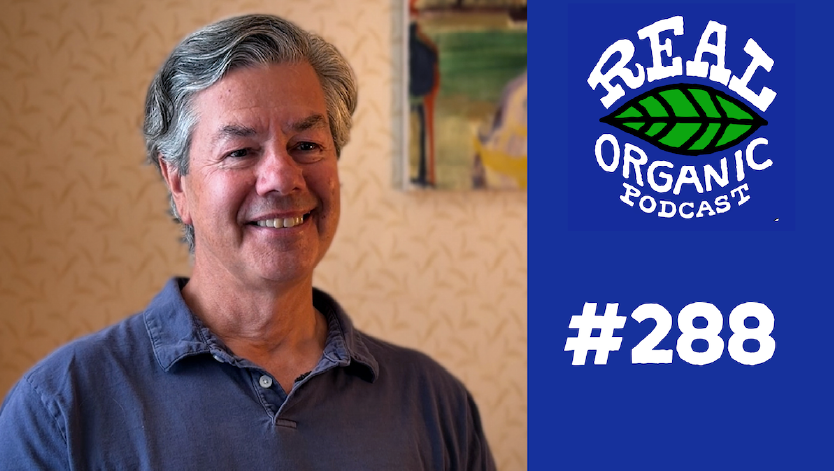

Episode #272
Dr. Ann López: California Farmworker Reality Tours
Dr. Ann López has spent years bringing people closer to the human reality behind California agriculture. Through her California farmworker reality tours, she helps participants better understand the living conditions, migration pressures, and daily hardships faced by the workers who harvest so much of the nation’s food. This conversation connects those tours to her larger work with the Center for Farmworker Families, which focuses on education, advocacy, and support for farmworker families in both California and Mexico.
Our Dr. Ann López interview has been edited and condensed for clarity:
You can subscribe and download episodes of our show through your favorite podcast app, our YouTube channel, or stream the audio-only version here:
Dave Chapman interviewed Dr. Ann López in California, January 2026:
Dave Chapman 0:00
My guest today is Dr Ann Lopez. Ann was a professor for some years at San Jose City College in the biology department, and she is now the executive director of the Center for Farmworker Families. Ann, I’ve actually been looking forward to this for a while. I first heard about you around the work protesting Driscoll’s spraying of pesticides close to schools.
Dave Chapman 0:30
You, Omar, and Dolores Huerta were all doing this. I read about you in Max Goldberg’s newsletter. Max is a friend and somebody I’ve interviewed. I was really impressed by that. Let’s have a conversation, and we’ll certainly talk about that issue of spraying around schools and the impact on the community. But I know that you’ve written a book. What was the name of your book?
Ann Lopez 1:02
“The Farmworkers’ Journey.”
Dave Chapman 1:04
“The Farmworkers’ Journey,” which I still haven’t read. I apologize. I should have, and I will. Do you need a copy? I do. I did make my donation to the Center for Farmworker Families. Let me just say, everybody, I’m a donor, a supporter of that organization. If you give a $250 donation, you’re entitled to a free copy of this book.
Ann Lopez 1:28
I will give you one before you leave.
Dave Chapman 1:30
Thank you. I look forward to that. You’re what I would call an activist academic. There are some people in academia who sit back, and they’re very dispassionate, and there are people in academia – some of them are my friends – who have a lot of passion, and they are acting on what they’ve learned. You seem to me to be in that second school. It’s good. That’s good.
Dave Chapman 2:09
It’s interesting; farmers are kinds of leaders. People respect farmers, and they tend to listen to them just because they’re farmers. People listen to academics. You have a lot of authority and respect just because you went through that work and got your PhD, and then you taught young people. Tell me about how you came to be so passionate about these issues.
Ann Lopez 2:37
Well, it had to do with meeting the farmworkers, seeing their family life, and seeing their children. I was really shocked, because in the Felton area here, I rarely see deformed children, or children with anomalies, or even hear about it.
Ann Lopez 3:00
I go down to Watsonville, where most of the farmworkers live, and start knocking on doors to meet families of farmworkers, and almost every one seemed to have some child with an anomaly that can be directly related to pesticide exposure. I started seeing lots of kids with ADHD, autism spectrum disorder, learning disabilities, bone cancer, brain cancer, and kids going to Stanford for treatment for leukemia regularly.
Ann Lopez 3:37
This is like an epidemic down there, and hardly anybody’s talking about it. I thought to myself, “These are children. How can we be doing this to children?” It’s no accident that they live in farming communities near fields where they are spraying toxic pesticides, which have been directly linked to these kinds of anomalies.
Dave Chapman 4:06
One thing that somebody said to me is, “Well, we need to deal with climate.” Chemicals were another generation; chemicals weren’t another generation. The use of chemicals in agriculture has exploded in the last 20 years. It’s not less, it’s much more.
Dave Chapman 4:24
Here we are, and people are getting sick from it. There’s a lot of denial about that, and interestingly, there’s a lot of denial about it in Iowa, where they have the second highest cancer rate in the country as a state. You can’t drink the water. Literally, people get sick from it. It’s the other super-intensive agricultural place.
Dave Chapman 4:49
There’s a great book about the two of them called “Perilous Bounty: The Looming Collapse of American Farming and How We Can Prevent It” by Tom Philpott. One is about California in the Central Valley and all the intensity of agriculture, and one is about Iowa and all these huge commodity farms. They’re both toxic. They’re both poisonous.
Dave Chapman 5:11
Here you are. We’re in California right now. Have you always lived in California?
Ann Lopez 5:16
Yes.
Dave Chapman 5:16
Yeah, this has been your home forever. Just to say, I don’t think that you’ve ever – your people aren’t farmworkers. You didn’t come from that world, but as you studied and learned in college, you did a lot of research on farmworkers, and you became really engaged.
Ann Lopez 5:40
Exactly. That’s what instigated the sense of passion that I have. I just feel it’s so unjust to treat this demographic in such a horrendous way, and to disrespect them and not honor their dignity. I think it’s reprehensible.
Ann Lopez 6:04
These people feed us, and yet we do everything we can to keep them down. We’ve done some legislative work to make their lives better, but the whole system is set up to keep them down. I just think it’s wrong. We ought to be supporting them.
Dave Chapman 6:28
I know that you actually have had a lot of thoughts about why the system evolved to keep them down. I’m not saying that people said, “How can I be evil?” But I think certain people said, “How can I make more money? How can I design a system that’s going to be as personally profitable as possible.”
Ann Lopez 6:49
Yes, that’s exactly it. It’s interesting to me, the different facets of it, because if you go on many of the farms or some of their subsidiaries, there’s not even oversight on the farm. I have women calling me saying that they’ve just been raped, and I think to myself, “Well, who’s watching this? This is illegal.”
Ann Lopez 7:18
Or workers calling me when it’s 108 degrees in the field, saying that they’re starting to faint, and their supervisor won’t let them go. Anything to make a buck, even if it costs people their dignity, their pride, their health, or whatever it takes.
Ann Lopez 7:37
You use and dispose of these people. They’re disposable human beings. This is just wrong, especially in California, the progressive state in the area.
Dave Chapman 7:54
California is so interesting. I came here the first time to look at the agriculture, and I was blown away. It’s so big and intense. There’s so much packed into a relatively small area. I don’t know what percentage of our fruits and vegetables that are produced in this country come from California, but it’s a lot.
Ann Lopez 8:15
Yeah, it is. Vegetables, I think it’s about 20%, and fruits, I think it’s in the 40% or 50%. Yeah, definitely. We feed the nation.
Dave Chapman 8:31
It’s interesting on fruits and vegetables. I think about 40% of our vegetables are imported, mostly from Mexico, and 60% of our berries and fruits are imported. It’s interesting; we need the world to feed us. We’re not feeding the world – that’s just not true. We don’t.
Dave Chapman 8:55
We export a lot of corn and soy. Not organic corn and soy. We import those too. It’s crazy. It’s madness.
Ann Lopez 9:06
It’s madness.
Dave Chapman 9:08
When you started to look at farmworkers, you found a population that was trapped. How did they get trapped?
Ann Lopez 9:20
Well, they were in Mexico. There’s no work in Mexico. They were impoverished. They hear that they can find a better life in this country, so they go to all lengths to get across the border and to get employed here.
Ann Lopez 9:41
The choice is really to stay here and be exploited as farmworkers, or to go back to Mexico and live in poverty that’s horrific – no running water, no heat, not enough food, and no electricity. Just basic necessities that most of us take for granted, they didn’t have. The government apparently can’t provide it for them, so they come up here.
Dave Chapman 10:15
Was Mexico always in such dire straits? Did this situation always exist, or has it gotten worse in the last 40 years?
Ann Lopez 10:29
I think it’s probably gotten worse.
Dave Chapman 10:32
Why?
Ann Lopez 10:33
I’m not 100% sure on that, because I’m not real clear on the politics, but I think more and more of the wealth is being concentrated in fewer and fewer hands. That takes it away from people, especially in the countryside.
Ann Lopez 10:54
I remember one of the farmworkers I talked to said that to get a blanket for her children at night, when it was freezing cold, she would pick up scraps of material she found in gutters or whatever, and wash them and sew them together to make some kind of covering for them. That’s the level that they’re dealing with there.
Dave Chapman 11:19
Yeah, it’s interesting. Did you, in your study, study the Green Revolution in Mexico?
Ann Lopez 11:26
Yeah.
Dave Chapman 11:26
Because that was, of course, the attempt to create a lot more food security and economic security in Mexico. That was the idea. The idea was, actually, that we were going to export Iowa to Mexico, and it sounds like it didn’t work out quite so well.
Ann Lopez 11:45
No, it didn’t.
Dave Chapman 11:46
I don’t think it’s worked out so well in Iowa, either.
Ann Lopez 11:49
No.
Dave Chapman 11:50
What happened in Mexico was that what really led to a lot of that consolidation of ownership?
Ann Lopez 11:56
If you can remind me of the date. If it was coinciding with NAFTA, the North American Free Trade Agreement, it was.
Dave Chapman 12:04
I think the Green Revolution preceded NAFTA, but NAFTA was a big deal. When was that about?
Ann Lopez 12:11
The early 90s
Dave Chapman 12:12
Early 90s. The Green Revolution was definitely before that. What happened with NAFTA?
Ann Lopez 12:21
Mexico always had corn superiority in terms of the volume, so they could always export. Plus, they had tariffs at the border to protect the pure strains of corn. When the US became corn dominant in the world, we wanted to get our corn into Mexico, and Mexico had the tariffs. The whole struggle was to get rid of these tariffs so our corn could pour into Mexico.
Dave Chapman 12:53
The tariffs protected the Mexican farmers.
Ann Lopez 12:55
The Mexican farmers, and they had farmed pure strains of corn for about every single ecosystem in Mexico for thousands of years – we think 7,000 to 9,000 years. Genetically, they were pure, and Mexico was the genetic repository for corn in the world.
Ann Lopez 13:21
Anywhere in the world where people had sick corn, they could bring their corn to Mexico, find a comparable environment, cross their sick corn with whatever the Mexican corn was, and that usually solved the problem.
Ann Lopez 13:37
Mexico wanted to keep it that way: “Let’s keep these pure strains.” But ultimately, this country got rid of the tariffs at the border and began pouring our genetically modified hybrid corn, etc., into Mexico, contaminating all of these pure strains permanently, and that’s how it’s remained. I think that the new president wants to bring it back…
Ann Lopez 14:08
Claudia.
Ann Lopez 14:09
Yes, the new strains, thank goodness. But that’s what happened, and that was another impetus in driving people off the land, because basically, you took away their livelihood, which is against the Universal Declaration of Human Rights.
Dave Chapman 14:31
I would point out that the corn that was pouring in was pretty heavily subsidized by the US government in its production. This wasn’t a fair horse race in the first place. If the government support hadn’t been there, the corn would have cost much more in the first place.
Dave Chapman 14:48
We were sending this subsidized corn down to compete with these poor farmers. They were growing healthy food for the people down there.
Ann Lopez 14:59
Exactly. They had done this for 7,000 to 9,000 years with no pesticides, no artificial fertilizers, nothing. The farmers that I interviewed in Mexico told me they never really had a problem with pests or any issues with their corn until the US started sending this corn and sending our pesticides and fertilizers down to Mexico. Once they started using those, then the problem started.
Dave Chapman 15:37
One of the people I interviewed is Larry Jacobs.
Ann Lopez 15:41
Jacob farms.
Dave Chapman 15:42
Jacobs del Cabo. They are in a partnership with all of these Mexican farms down in Baja. It’s a fascinating story of when Sandra and Larry were traveling through Mexico years ago. They saw these farmers, and they were good farmers, and they were doing a good job, and they weren’t using pesticides yet.
Dave Chapman 16:06
They weren’t using the chemicals yet, but they couldn’t make a living because they didn’t have a market. Everybody they knew was also a farmer, also growing their food. They said, “Well, I think if we could export this to the US as organic food, we could find a market.”
Dave Chapman 16:24
They worked together on that for years, and they said, “We just got there in time,” because the pesticides were starting to be subsidized by the government, in partnership with these companies that were producing them and the fertilizers together. They were almost giving them away in the beginning. It became very quickly the dominant culture.
Dave Chapman 16:47
But they got into these counties, and they said, “Let’s not do it that way. Let’s do it organically.” They actually brought in people to help train the extension agents – the government agents. They did it, and they succeeded. Of course, it works.
Dave Chapman 17:04
But you see that it’s a big system; it’s not just a personal decision. If you come 15 years too late, now you’re up against a whole established system of education, training, and support for buying those chemicals.
Dave Chapman 17:26
I know Mexico struggles with very similar issues in terms of – they’ve got this chemical industry breathing down their necks too. It’s an international concern. But the Mexican farmers who were doing it in an old way – they could no longer compete on the market.
Dave Chapman 17:48
What was the impact on their lives of this great NAFTA that was supposed to help everybody? The idea was that a rising tide would raise all ships. Did it raise their ships?
Ann Lopez 17:59
No, it drove millions of them – what was it? Fifty-one million- off their land. They had three choices. One would be to go to a large city and live in a shanty town and send money home to the farm to keep it going. One was to stay on the farm and starve with your family.
Ann Lopez 18:25
I met two families that made that choice. They said they lived there for generations and generations, and they weren’t living, and if they died on the farm, at least they’d be on their farm. Then the third was to make the undocumented border crossing to this country, and most of the farmworkers we have today in California are from that group. Most of them were what I call economic refugees of NAFTA.
Dave Chapman 18:56
By economic refugees, they had little choice. They had to do something, or they were going to die. They had to. They weren’t just looking for an increased standard of living.
Ann Lopez 19:06
No. In fact, that’s where people get it wrong in this day and age. They think, “Oh, they’re just coming here for a better life.” No, they’re coming here out of survival. This is survival.
Dave Chapman 19:22
What happens when they get here?
Ann Lopez 19:27
They live in households where there are as many as eight people to a bathroom. They live in cramped conditions and sometimes can’t afford the rent. In fact, that’s the biggest request that we have in our organization: rent assistance. The rents are so high. They come and then they work, but they make such little money. They live in poverty. They make maybe $25,000 a year, which no one can live on in this area.
Dave Chapman 20:11
Now, I have a question. At this point, California has a minimum wage, which is a lot more than it used to be.
Ann Lopez 20:18
But farmworkers don’t fit there yet.
Dave Chapman 20:20
Is that right? The minimum wage of whatever – $15 or $16/hr – does not apply to farm work?
Ann Lopez 20:25
Right. In fact, it’s worse than that. Sometimes the growers steal their wages. There’s no contract, so the farmworkers work for a week or two or whatever, go to get paid, and they’re not paid anything. The grower says, “Get out of here. I’ll call ICE and have you deported,” etc.
Ann Lopez 20:49
See, it’s given the growers the perfect system because everyone is afraid, and so they’re not going to complain, they’re not going to rebel, or tell on them, or whatever. The grower can do anything they want, and that’s one reason why it’s gotten so big.
Ann Lopez 21:11
During the Cesar Chavez era, most of them were documented in one way or another – the ones that did the strikes.
Dave Chapman 21:19
Was that the Bracero program?
Ann Lopez 21:21
That was part of it.
Dave Chapman 21:24
At that point, people essentially had a green card to be here working. Since then, far more of the workers don’t have any kind of documentation.
Ann Lopez 21:35
Right, because they were run off their farms by NAFTA. That’s pretty much where it stands.
Dave Chapman 21:42
Have they ended the Bracero Program?
Ann Lopez 21:44
Yes, that ended.
Dave Chapman 21:47
That meant strong arm?
Ann Lopez 21:50
I think, yeah. Braceros or arms for picking crops.
Dave Chapman 21:57
They were identified for their arms, because they would come in and they would… All of these crops. Just to say, so people understand, why California is full of immigrant labor, but Iowa isn’t. In Iowa, the agriculture is very much large machinery. It’s grains, and there’s very little hand work. But for berries and vegetables, there’s a great deal of hand work for harvesting and planting. It requires a lot of people.
Ann Lopez 22:32
Bent over all day long, picking strawberries. Not only that, we do farmworker reality tours, where we take people out to meet the farmworkers, and I have them demonstrate the skill set involved in picking strawberries.
Ann Lopez 22:51
It’s certainly not just yanking berries off of plants. They have boxes, they have baskets. They have to arrange the berries perfectly in the baskets. Not only that, if they’re being paid on the clock, they have to do it fast so that they can get enough money to survive.
Dave Chapman 23:13
That’s right. So piece rate, very much driven. It’s brutal. I saw a home of strawberry harvesting in Florida; it was part of the Coalition of Immokalee Workers. My God, these people were athletes. It wasn’t just hard work, but they were so graceful in throwing a bushel – a basket of tomatoes – up to somebody who caught it. That was really both obviously intense work, but they’re very skilled. People doing this work are very skilled.
Ann Lopez 23:50
Very skilled, exactly.
Dave Chapman 23:52
If you put a civilian out there, it’s a joke, they wouldn’t make it until noon. This is hard work, and it’s skilled work.
Ann Lopez 24:01
You ask what they do once they get here – after they cross the border – and a lot of growers won’t hire them unless they know how to harvest strawberries. They have to find a grower or somebody who will teach them and then pay them less money as they get skilled, and once they’re skilled, they can go out and get a better job.
Ann Lopez 24:29
But still, there are three things that would transform the lives of farmworkers in this area, at least. Number one: comprehensive immigration reform. No one who has worked weeks, months, and years in the field should be worried about deportation. What would we do without them? The entire industrial farming system would collapse without their labor.
Ann Lopez 24:57
Number two: they need a living wage. That means minimum wage at the very least, but preferably even more. Lastly, they need a contract with the grower, which they never get, so that if the grower tries to steal their wages, they have some kind of legal recourse. Now they don’t have that, so anybody can steal their wages. So here they are, working this hard, already living in poverty, and they work another couple of weeks, or however long.
Ann Lopez 25:33
One woman on our farmworker reality tour, the grower stole the wages of the entire family for an entire season. There’s no recourse. If they go to an attorney, the attorney will say, “Show me the contract.” If they don’t have a contract, that’s why I say I think they need a contract.
Dave Chapman 26:02
If they publicly complain, one of two things happens. One is they get deported. The other is they get blacklisted for work, so they can’t get a job.
Ann Lopez 26:13
That’s exactly right. The odds are very much against them on all counts.
Dave Chapman 26:20
Okay. It seems like what you’re describing is that a significant part of the economy of California would collapse without all of these workers. Probably the majority – at least half – are undocumented?
Ann Lopez 26:37
I think it’s more than that. I work a lot with the Oaxacan farmworker population in Watsonville, and I have never met an Oaxacan farmworker that has legal status here.
Dave Chapman 26:55
For people to understand, when you say Oaxacan, there are different subgroups of farmworkers. Some are Hispanic, Spanish-speaking people from Mexico, and some are indigenous people from Mexico who have a different language from Spanish. They might speak some Spanish – maybe not – but they have their own native tongues.
Ann Lopez 27:19
Right, indigenous. We have a large Mixteco population here. Some Zapotec, Triqui, and what else? There’s about four different subgroups, each of which speaks their own language.
Dave Chapman 27:41
I think even in Mexico, you see almost a class system within farmworkers as well. Indigenous people are at the bottom of that.
Ann Lopez 27:51
Right. That’s how they’re treated as farmworkers too. They’re not important; they’re expendable. I just hate to see that. Bodies being shipped back to Mexico for burial. One mother sent me a picture of her daughter, who was 15 years old with bone cancer on the day that she died. It just breaks my heart. I mean, these are children, 15 years old.
Dave Chapman 28:27
In any particular cancer, it’s very hard to prove why that person got the cancer, but what we do know is that there are types of cancer that appear to be connected to the use of chemicals in that area.
Ann Lopez 28:43
The concentration of people in South County here that get these anomalies compared to Felton, for instance, is ridiculous. What else could it be? Plus, the scientific studies are out there. They finally got rid of chlorpyrifos, which causes birth defects in pregnant women.
Ann Lopez 29:12
One of the key women farmworkers in our work, where we do a lot of the distributions of goods and such, has four children. The first two children, she didn’t work in the field – they were fine. The second two kids, though, have just been a nightmare for her and for themselves. They’ve got learning disabilities, they’re into drugs, and their behavior is completely screwed up.
Ann Lopez 29:41
They’re just like night and day, the two sets of children, depending on whether – Ernestina is her name – she was working in the field during her pregnancy or not. It’s heartbreaking. I’d like to take all these people in Driscoll’s and Bayer-Monsanto, come and visit these people, sit down and talk to them, and see what they think.
Ann Lopez 30:12
Is this ethical that you’re doing? Your chemicals are directly causing these issues. You can read the scientific studies about it. How can you live with yourself knowing that you’re doing this to innocent children?
Ann Lopez 30:32
It’s disgraceful. I don’t get it. It just makes me so angry. I can’t even talk about it without getting so angry. It’s got to stop. This is no way to treat human beings.
Dave Chapman 30:49
I was just talking with Omar. One of the things that was really apparent talking about this is that somebody in New York City buys a pint of strawberries, and they’re very concerned, rightfully so, whether there’s something in those berries that’s going to hurt their kid. We all should be concerned for our children.
Dave Chapman 31:19
Of course, the children of the farmworkers are no exception. They’re concerned too. But what’s interesting is that I don’t think it’s true, but it’s possible – I might be wrong – that there is nothing that will hurt their child in that pint of strawberries. But I don’t think there’s any doubt that it’s hurting the children of the people who harvested those strawberries.
Dave Chapman 31:42
The question is, can your sense of concern and justice extend to the people who are feeding you, as well as to your own children that you love so much?
Ann Lopez 31:54
Exactly. In Watsonville, the city has an approximately seven-mile diameter, and a lot of these pesticides drift that far. No matter who you are, what race you are, if you’re in Watsonville with your windows open on the day they’re sprayed, you’re going to get exposed. It’s just a travesty.
Ann Lopez 32:26
We don’t need the pesticides. There are plenty of studies. Look at the Rodale Institute 30-year study on organic farming, or the UN study, for that matter, on organic farming. There are plenty of ways to grow plenty of food without using all of these awful chemicals.
Dave Chapman 32:50
Driscoll’s – 20% of their production is certified as organic.
Ann Lopez 32:57
But they’re still unethical.
Dave Chapman 33:00
I understand, but they’re proving to the world it can be done. Twenty percent of their production is certified as organic. Now, I have some disagreements with them about what they’re certifying. I do. I don’t think all of it should be certified as organic. Nonetheless, pretty clearly, they’ve demonstrated that they can grow strawberries without spraying them or without fumigating the soil.
Dave Chapman 33:25
It’s a skill to it. It has to be done, but they know how to do that. They have that skill. Then it becomes just purely an economic proposition. It’s not a horticultural challenge; it’s an economic challenge. Perhaps, we’ll say, it is more expensive to do it without the chemicals. The chemicals, short-term, are very profitable; long-term…
Dave Chapman 33:52
It’s interesting. Right now, Bayer just lost an effort to get Congress to make it so that they weren’t legally liable for the illnesses and cancers that came from using Roundup. They’ve succeeded in several states, I think North Carolina, and I’m not sure what the other state was – maybe one of the Dakotas – and they got the state government to say, “You can’t sue them in this state.”
Dave Chapman 34:24
They tried to get that passed federally. There was an interesting coalition of the Democrats and MAGA that got together, despite some disagreements, and said, “No, we’re not going to pass that law.” Bayer, now, has gone to the Supreme Court saying, “Well, can we get you to say that we can’t be sued?”
Ann Lopez 34:46
Look at all of the lawsuits – literally billions of dollars on Roundup. The whole thing of it being scientifically justified by a ghostwriter within the company. Oh, my God. These people should be put out of business. Shut them down.
Dave Chapman 35:10
Could you explain that? I know that story, but could you explain about the ghostwriting? How did that work? Do you know a little bit about it?
Ann Lopez 35:18
Well, just a little bit. But they had someone within the organization actually write up the scientific research so that it favored Bayer-Monsanto. It looks like you can go back and read it and find out that Roundup is safe, or nearly safe.
Dave Chapman 35:39
They got somebody who wasn’t there to sign it, as if they had written it themselves.
Ann Lopez 35:45
Exactly.
Dave Chapman 35:47
It was a big deal.
Ann Lopez 35:48
How do you trust any food supply with that kind of nonsense going on? Really, even organic – who knows – they could have a ghostwriter for an organic producer.
Dave Chapman 36:06
It’s a big deal because, actually, I know the woman – I’ve interviewed the woman who put out the article that challenged that. The journal rescinded the article, the original one from 2000. They said, “Yeah, this is based on false data, and we’re saying this is no longer approved by our journal.”
Dave Chapman 36:28
That was very good. It swept out their legs of having a legal defense that Roundup is safe. We know that this is true of many chemicals. You hate to see it when it actually invades academia because you expect scientific journals to be peer-reviewed and to be the best science we have, but it is not the best science we have.
Ann Lopez 36:57
If it’s written by a ghostwriter in the company that’s probably getting paid billions to write the nonsense, geez. I can hardly talk about it; it makes me furious.
Dave Chapman 37:13
Something I talk about sometimes. Do you know about the fire at the Triangle Shirtwaist Factory in New York 100 years ago?
Ann Lopez 37:24
I remember that.
Dave Chapman 37:25
You remember that?
Ann Lopez 37:25
Yeah.
Dave Chapman 37:26
It was a big deal. A lot of people – 100 people – died in the fire, mostly women and children who worked in this factory. They kept the doors locked so they couldn’t sneak out and steal anything. They were trapped in there when the fire came, and all they could do was jump out the window and die.
Dave Chapman 37:44
It was a terrible event. They had the bodies lined up – 100 bodies – on the street. It was in the Lower East Side of Manhattan. The New York Times was taking pictures, and Frances Perkins, who later became the Secretary of Labor for the United States under FDR, was there seeing this, and it changed people.
Dave Chapman 38:08
That fire changed people. That was the beginning, really, of legal worker rights in this country. That was the beginning of OSHA, which drew directly out of that fire. Workman’s compensation and things that we take for granted that protect our workplaces to be safe – those are good things.
Dave Chapman 38:29
But the thing that was really significant about this story, to me, is that 100 years later, the garment industry is gone from New York, and it’s gone to Sri Lanka, Bangladesh, and they have the same fires every week and people dying – the same terrible safety standards. But people in this country don’t connect to that. It’s far away.
Dave Chapman 38:55
It’s people who speak a different language. We don’t know them. We don’t see them. We don’t see the bodies lined up on the street. It really showed me that the connection between the person who is doing the work and the person who is consuming the work is important.
Dave Chapman 39:14
The people who are dying from pesticides are not dying the next day; we’re not lining the bodies up on the street. They’re dying years later. They’re dying because of it.
Ann Lopez 39:28
After a lot of suffering.
Dave Chapman 39:29
After a lot of suffering, but it’s not such a clear connection that you can go, “Because you did that, they died.”
Ann Lopez 39:38
But people are waking up. I’m convinced they’re waking up. When I first started my research back – and, geez, it’s been so long, I forgot – ’96 or whatever, there was no information in any of the news about farmworkers. You would not know they existed unless you drove past the fields and saw them working.
Ann Lopez 40:04
Now, over time, there are more and more articles about farmworkers. I get requests; in fact, we have, I think, seven farmworker reality tours scheduled for spring, beginning in April. People wanting to meet the farmworkers. We have pesticide reality tours, where we can take people and show them the fields that are actually being sprayed.
Ann Lopez 40:32
We have more and more awareness growing. In fact, people always seem so concerned at the end, when we have discussions, and want to know what they can do. That, to me, is a very positive sign. I think eventually the public will demand that this nonsense be stopped. It has to be stopped. It’s just crazy and cruel.
Dave Chapman 41:01
There are two forces colliding right now in America. One is a group of people who say, “This is terrible. We need to treat people better. These are the people who are feeding us. We rely on them. They are part of our community. They are not alien invaders. They are us.”
Dave Chapman 41:21
We have another group who are saying, “These are alien invaders. They’re destroying our country. They’re bad people. We need to deport them.” I know that you’re living in the middle of this, and you’re very connected to people who are deeply impacted by both forces contending over how this country is going to treat these people.
Ann Lopez 41:46
By the way, I have never met a farmworker who’s a criminal. In all my years of working with thousands of farmworkers, I have never met one who’s actually a criminal. That’s why sending ICE out to get rid of the “criminal aliens” is so absurd. They’re not bad people. In fact, they’re some of the kindest, most resilient, caring people.
Ann Lopez 42:18
I’ll never forget driving my car inadvertently into a curb, and the tire came off, and all of a sudden, several people with their tools from local apartments all came down and started working on my tire. In my mind, I was thinking, “I have to rent a car, have my car towed, etc.”
Ann Lopez 42:42
They fixed the effing tire for me. All I had to do was go to Toyota and get two new bolts. Isn’t that amazing? That’s the kind of farmworkers I know about. They’re just the best.
Dave Chapman 42:56
I have seen statistics that actually, as a group, this group is more law-abiding than the general population. They pay their taxes. They don’t draw that many benefits from it.
Ann Lopez 43:12
No, they don’t draw any that I know of.
Dave Chapman 43:16
They’re paying into Social Security, but they’re not able to get back Social Security, even when they’re old, because they’re not documented. But they had to pay into it the whole time they were working.
Ann Lopez 43:27
That’s exactly right.
Dave Chapman 43:30
If somebody gets hurt – a farmworker who’s undocumented on a job – are they covered by workers’ compensation, or are they on their own?
Ann Lopez 43:39
I think they’re pretty much on their own, but fortunately, we have Dominican Hospital. It’s run by nuns, and they do excellent medical work for farmworkers, and there are no questions asked there. Then we have Salud Para La Gente – Health for People – and that’s another local organization that treats farmworkers without requiring payment.
Ann Lopez 44:10
There are resources in this area, but in some areas, there aren’t, and I don’t know what people do, especially since farmwork is so risky.
Dave Chapman 44:28
Most of the farms I visited – and I’m visiting organic farms – the crew is almost entirely Spanish-speaking. Who’s doing that work in California? Most of the farmworkers that I know – not all; some are of Mexican descent, but many, many are Anglos – and they pretty much all speak Spanish because they have to learn it to communicate with the people who are doing the work on that farm.
Ann Lopez 45:01
That’s exactly right.
Dave Chapman 45:03
It’s kind of an amazing example of a multicultural workforce. I do know some organic farmers who have very high labor standards. They pay very well, and they have medical benefits. They have better benefits than I have on my farm in Vermont for the people who work for me. I don’t know if you know Phil Foster at Scott Park, Full Belly Farm. I know you know Dick Picot.
Ann Lopez 45:35
Dick Picot at Lakeside Organic. He’s the best. He’s great.
Dave Chapman 45:41
Just to let people know, there are people doing the right thing.
Ann Lopez 45:44
And making a profit.
Dave Chapman 45:47
And making a profit. It’s possible to do both. I know Jim Durst. He got people making $26–$28 an hour. Hard workers. Yes, they work very hard, and they stay year after year, of course, and they have medical benefits. It’s pretty impressive. They have medical benefits for their families.
Ann Lopez 46:14
That’s the way it should be.
Dave Chapman 46:15
That’s the way it should.
Ann Lopez 46:16
That’s right.
Dave Chapman 46:18
You have to be an extraordinary manager to be able to pull that off.
Ann Lopez 46:22
I guess so. But it’s obviously being done. Maybe there should be classes to teach people how to do this. But the status quo needs to be changed. We need a different system.
Dave Chapman 46:41
I have never been to one of the large organic farms. I’m getting the sense it’s not better there. These big places – they’re making money. Let’s talk about Driscoll’s, because you were part of this effort to call out Driscoll’s for spraying close to the schools. Driscoll’s is the big dog in town. In Watsonville, they are the big farming company.
Dave Chapman 47:17
As I said, they are the biggest there. Over 70% of the organic berries sold in America are Driscoll’s. That’s a bigger monopoly than J.D. Rockefeller had with Standard Oil. He was only at like 62% of the oil, but they’re over 70%, so that is a true monopoly. But that’s only 20% of their business; the other 80% is chemical.
Ann Lopez 47:44
You know about their treatment of the workers in the subsidiaries in Mexico.
Dave Chapman 47:49
Please tell me.
Ann Lopez 47:51
They actually send the army out to beat the farmworkers. David Bacon did a study of this. When I read that and heard about it, that was the last Driscoll’s berry I decided I’d ever eat. To beat the farmworkers – it’s one thing to treat them horribly, but to beat them?
Ann Lopez 48:18
In Mexico, and I guess there it’s legal. I think the company’s unethical. I’ve met with – what’s his name? I’m blanking on his name, but anyway.
Ann Lopez 48:37
From Driscoll’s?
Ann Lopez 48:38
Yeah.
Dave Chapman 48:38
Miles Reiter? You’ve met with him?
Ann Lopez 48:41
Yeah.
Dave Chapman 48:43
You told him about your concerns, and what did he say?
Ann Lopez 48:48
That they’re gradually going to move toward organic. They always say that, but they don’t, or if they do, it’s on such a small scale that it’s not really noticeable.
Dave Chapman 49:04
What would be your hope for Driscoll’s, and for the whole industry?
Ann Lopez 49:11
Transformation to all organic. We need that. There’s been, I think, a UN study that showed that if we converted all agriculture overnight to organic, we could still feed the whole world. The question is, why aren’t we doing that when the costs are so high – the human costs are so high and so horrific?
Dave Chapman 49:42
I would just say I would give it a little more than one year for that conversion. There’s a whole process – the soil needs to come alive, and people need to be trained. It’s not as simple as “Stop using chemicals,” but it can be done. It can be done on a massive scale.
Ann Lopez 50:00
Yeah, that’s what the study showed.
Dave Chapman 50:02
The question is, what is the bottleneck that prevents that from happening? Profits? I know Driscoll’s would say that they would go all organic if the market would go all organic. I’ve heard their president say that. Of course, that means that they still need to make their profit.
Dave Chapman 50:25
Driscoll’s is not a nonprofit. It will follow the path. But could we get the market to demand organic? When we talk about – you met with Miles, and you said, “Do this,” and I imagine he would love to do it. I don’t think that he gets up and goes, “God, I’m so glad we’re using all these chemicals and making people sick.”
Ann Lopez 50:49
No, I doubt that.
Dave Chapman 50:50
I think he’s saying, “Well, I got to do what I got to do to run a business.”
Ann Lopez 50:56
It’s public awareness, and that’s why I’m inspired seeing all these articles about farmworkers coming in the local newspapers, on the TV, and on the news. More and more awareness is happening, and getting the public to the point where they demand it. If the company isn’t willing to do it, then they stop buying, and that’ll definitely affect the bottom line.
Dave Chapman 51:28
Interestingly, Vermont actually has a higher percentage of the acreage that is organic than California. But in California, everywhere you look, organic is everywhere; not only in the farmland, but in every restaurant and store. It’s a big deal.
Ann Lopez 51:51
Yeah, it is.
Dave Chapman 51:52
You can go to a little store and get an organic sandwich. I can’t do that in Vermont.
Ann Lopez 51:59
You’re right. Well, you should stop by Wild Roots Market down here. All of their produce is organic. They don’t have anything that’s not organic. They have two stores in this valley where most people go to shop.
Ann Lopez 52:15
I remember years ago, geez, in the 70s, there was just one stand in San Jose that sold organic, or “healthy” type of vegetables, and look how that’s blossomed. We’ve got Wild Roots Market, New Leaf Market. We’ve got all these different markets now that are selling organic
Dave Chapman 52:46
Good Earth.
Ann Lopez 52:46
Good Earth. I think it’s public awareness again.
Dave Chapman 52:51
You’re doing your best to bring that public awareness. You’re retalking about it, and appreciating that they’re real people on the other end of this equation.
Ann Lopez 53:01
That’s right. That’s what people say who go on the reality tours. To actually meet a farmworker, it’s one thing to read about them, but to actually go out and meet them, shake their hand, ask them questions, and find out about their lives makes a whole difference. They’re viewed as human beings rather than human doings.
Dave Chapman 53:27
All right. I promise that we will promote the reality tours in our letter about this interview and in the interview program notes. I will come and take a reality tour, because I would love to. That would be great.
Ann Lopez 53:43
Yeah, meet our farmworkers. They’re just wonderful people. Really, the stuff that you hear in the news about farmworkers is so off base. It’s disgraceful.
Dave Chapman 53:56
Is that true in the local papers in California? I would imagine it’s a little bit different here that I would imagine there’s a little more protection of farmworkers compared to a lot of the country, where maybe they don’t have any farmworkers, and they go, “Oh, these people are coming to take our world.”
Ann Lopez 54:15
Illegal alien like they’re from another planet.
Dave Chapman 54:18
They’ve never met a farm worker.
Ann Lopez 54:20
Exactly, or heard their story.
Dave Chapman 54:25
You’re familiar with the work of the Coalition of Immokalee workers.
Ann Lopez 54:29
Yes, they’re the outstanding rebels within the system that I see. They’re fantastic.
Dave Chapman 54:37
I so respect them. It’s interesting, their story. When I talked to them, Greg and Gerardo – and I know him, I pronounce his name badly, I try – but they said, “The first ten years we were marching picket lines at the farms, and we got nowhere. We didn’t accomplish anything that we could see. We recalibrated and we rethought it, and for the next four years, we went out and we organized a boycott against Taco Bell.”
Ann Lopez 55:20
Yes and one cent, wasn’t it?
Dave Chapman 55:24
“Just don’t buy from Taco Bell until they sign our contract. We went and talked at churches and colleges across the country. We go out every weekend, we drive a little bus around, and we camp out in these churches and give talks. After four years, Taco Bell signed the contract.
Dave Chapman 55:44
After that, they got Walmart, Whole Foods, and a bunch of other companies to come in and sign the contract. As you say, they give a little bit of money. They charge a little bit more, and that money goes to the farmworkers through this organization to help improve their lives. But the people who are selling to Taco Bell also have to sign the contract.
Dave Chapman 56:13
The contract says that they have to pay fair wages, not have any sexual misbehavior towards the workers, pay them what they’re promised, and it’s policed by the farmworkers. Now, sometimes farmworkers will make a charge, and they go, ‘We investigated. It wasn’t true.’ Other times they go, ‘We investigated. It was true. So this farm has got to clean up their act, or they’re out.'”
Dave Chapman 56:46
It’s worked, I know. It’s such a beautiful model of something that ultimately benefited everybody. They had to find a way to reach the end eater. They had to give people a chance to see the bodies lined up on the street and say, “Not in my neighborhood. This is not going to happen.”
Ann Lopez 57:11
That’s what we need for the children in Watsonville.
Dave Chapman 57:15
Everyone has to feel like, “That’s my neighborhood. Not in my neighborhood. If I buy these berries, I help poison those kids.” That’s the understanding we need to create.
Ann Lopez 57:27
That’s exactly, right. That’s it. You got it.
Dave Chapman 57:32
All right. Dr. Ann, you’re doing God’s work, honestly. I know when I called you to set this up, you said, “I can’t do it that way. I’m taking food to the farm workers that day.” I know that you’re working hard at this, and I have great respect for it.
Ann Lopez 57:54
I always tell people I either do something about this with my knowledge, or else I get ulcers. I think the more appropriate and helpful choice is to do something about it.
Dave Chapman 58:12
Okay, last words, anything I didn’t ask I should have or that you really wanted to say?
Ann Lopez 58:19
What I want to say is that if you have a sense of purpose in life, you need to follow the purpose and do what your calling is. I found that starting the Center for Farm Worker Families, I agreed with myself that I would not get any kind of pay.
Ann Lopez 58:43
I would do it on a volunteer basis, as long as the public and people supported the work, and we are growing every single year. I think that, in itself, is a good sign that farm workers are on the road to some kind of recovery from this nightmare.
Dave Chapman 59:04
That’s great. I have the same deal with myself. I don’t get paid for this, as long as it’s working and we’re growing people’s understanding and support so that we can all come together and try to create the world we want.
Ann Lopez 59:20
Yes, exactly.
Dave Chapman 59:23
All right. Dr. Ann Lopez, thank you so much.
Ann Lopez 59:26
Thank you. I’ve enjoyed it.
More Podcasts
View All Podcasts ➔