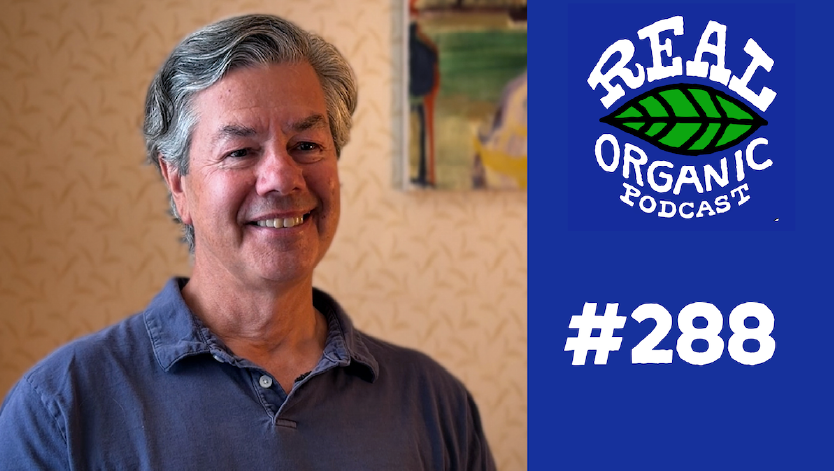

Episode #273
Suzanne Simard: When The Forest Breathes
Suzanne Simard has helped change how the world understands forests, from the underground relationships of mycorrhizae to the larger question of how forests should be managed in an age of climate disruption. She is known for connecting the life of the soil to the health of the whole forest, and for explaining why clear-cutting, plantation thinking, and herbicide-dependent forestry have pushed ecosystems in the wrong direction. In this conversation with Linley Dixon, she makes her compelling case for healthy forest management rooted in diversity, natural regeneration, local adaptation, and a much deeper respect for how forests actually heal than what the forestry industry is willing to adopt.
Our Suzanne Simard interview has been edited and condensed for clarity:
You can subscribe and download episodes of our show through your favorite podcast app, our YouTube channel, or stream the audio-only version here:
Linley Dixon interviewed Suzanne Simard via Zoom February 2026:
Linley Dixon 0:00
I would give anything to have known about you. I don’t know if you saw the little description, but if I had known about your lab back in grad school, I would have insisted that I work under you, because when I took mycology for the first time, you learn about mycorrhizae, and you’re just like, “Well, obviously there must be some exchange going on.” It just kind of glares at you when you hear about them.
Linley Dixon 0:25
I really annoyed my professor. This was in 2000, and you had published by then – cover of Nature, “Wood Wide Web”, all that stuff had come out – but I didn’t know about it. I kept asking my mycology professor, because I was in plant pathology but in a mycology course, and I kept saying, “Are plant defense compounds passing back and forth?” He didn’t know. But I kept asking him, because I thought, “Well, surely he must know.”
Linley Dixon 0:57
I was young; he was the professor. Finally, he said, “Linley, let’s do the experiment.” He actually helped me set up two tomato plants in a pot, and I inoculated one of the tomato plants. First, I couldn’t get the mycorrhizae to infect the tomatoes, because they were just in potting soil, and there was too much fertility there. It wasn’t limiting enough in phosphorus.
Suzanne Simard 1:23
You probably didn’t have very good inoculum, I don’t know.
Linley Dixon 1:26
Do you know Joe Morton? He was the professor. I don’t know if you know him, but he had the biggest library of mycorrhizae at the time, and he was identifying them all visually, not through DNA and everything. Anyway, it was a really cool thing. We ended up finding salicylic acid in both the inoculated and the non-inoculated plants. It was just the start. I would have given anything to have worked in your lab and just taken it further. I wish I had known about you.
Suzanne Simard 1:55
I was looking at trees. In China, there’s a whole group of people looking at tomato plants. Yan-Yan Song did a bunch of work with tomato plants and found stuff moving back and forth and changing their enzymes. That work was going on… That came out in like 2015 or something, so quite a bit later, I guess after you were done. But there’s been some really good work done on that topic.
Linley Dixon 2:30
I love the professors that try to visit and say, “Okay, let’s do this.” I love that curiosity that you have in your students.
Suzanne Simard 2:39
Yeah.
Linley Dixon 2:39
Great. That’s just a little background, but I’d love to get started. We’re a group of organic farmers that work to keep the integrity of organic strong. We went to the National Organic Standards Board to fight for soil health to remain part of organic farming and really the core of it – that this is the heart of what organic farming is.
Linley Dixon 3:01
We all spoke about the magic of the soil, but we didn’t have the scientific basis. We just kind of felt it in our bones. I would love to start with just your thoughts in this moment on what we might be experiencing out there when we say “the magic of the soil,” but from a more scientific perspective.
Suzanne Simard 3:22
The magic of the soil is the life in the soil. It’s the food web, and all of the creatures in the food web and how they’re so organized in their food chains, transforming and transmitting energy through the food system, and then cycling nutrients and water as they’re doing it. I think that that’s the magic, and out of that emerges soil fertility.
Suzanne Simard 3:52
I don’t study the soil food web so much; I study the mycorrhizae, but I know about that work. I remember when I was in graduate school, I had the privilege of taking Elaine Ingham’s class. She was one of the pioneering people who was trying to quantify the trophic levels in these soil food webs. It was totally fascinating. Then I’ve had some of my students do aspects of that over the years, but mostly I’ve been focused on the mycorrhizae.
Suzanne Simard 4:27
But yeah, it is in that self-organized, complex system of soil organisms, of which there are literally billions in the soil, most of which we don’t even know their names. That is the magic. Anyway, you could ask me more questions. But I think that there’s some incredible stuff we just don’t understand that emerges as this incredible health of the soil.
Linley Dixon 4:58
You’ve done such a good job at taking your scientific research. This concept of the “Wood Wide Web” is taught in curricula, and all around the world now. I just think we need more of that. I want to first celebrate your activism and how you’ve been able to translate your research into these incredible stories in your books, then really get out there and talk about what your research is telling us on how we need to be managing forests differently.
Linley Dixon 5:36
I’d love to just kind of understand how forests are being managed differently now. A huge part of your new book, “When the Forest Breathes: Renewal and Resilience in the Natural World,” talks about this huge equipment, the massive clear-cutting, and the compaction of the soil. Could you talk a little bit about the evolution of how our management of forests has changed over time?
Suzanne Simard 5:56
Yeah. The impetus for the book is just to raise awareness about what’s happening in forests, that we need to be doing so much better than we are. So I’ll just start with that. But if we cast back over millennia, people have been living in and working with forests since people have been around, which dates back to 700,000 years, but forests have been here before then. So we’ve always been interacting and working with forests.
Suzanne Simard 6:30
In those early days, it would have been a very small touch, of course. Then as time progressed and societies became more complex, there was more intense interaction with forests, but still very much aligned with the connection and cycles in forests.
Suzanne Simard 6:54
I work with a lot of Indigenous people along the west coast of North America. All of their harvesting practices and food production practices are aligned with the natural cycles of the earth. They’re really attuned to what the forest is telling them, and they base their practices on what’s available, what’s productive, and what’s saying yes to harvesting these trees.
Suzanne Simard 7:30
Then, of course, it’s for good use, to make clothing, housing, and things that are needed. That is a very attuned management system that is following the cycles, following the need, and never taking more than you need. Then that changed.
Suzanne Simard 7:51
When North America became colonized, it started around 1,000 years ago, but really took root about 500 years ago. Then we started harvesting forests more intensely. At first, it was a light touch. It was still, I guess, subsistence harvesting, if you will. Then about 100 years ago, or maybe 200 years ago, we started doing more intense harvesting of North American forests.
Suzanne Simard 8:28
That became part of the settlement period across North America. It’s different in Canada than the US. I’m in Canada. Things were slower. It didn’t happen as rapidly. The population is only about 10% of the US population, so the intensity of forest management is that much less, and that much slower.
Suzanne Simard 8:51
But I can speak mostly for Canada. As forest management progressed across Canada, there was still very low-intensity use, but the harvesting of forests really started to take off in the early 1900s. There was a recognition around 1900 in Canada that we needed a Forest Service that would start regulating the cut because it was becoming more exploitative.
Suzanne Simard 9:30
There was a Forest Service established, but it was mostly just to serve the settler communities. Then by the 1950s and 1960s, that’s when harvesting started to become more visible, especially along the coast, where the forests were the most productive. Then by the 1970s, there was clear-cut harvesting happening across Canada. That’s when the industrialization of forestry really took off.
Suzanne Simard 10:03
Clear-cutting became continuous clear-cutting, which means whole valleys were being taken out. By then, we were really entering this era of moving from hand-falling, to chainsaws, to feller-bunchers, to bigger equipment, to the point now where the impact is huge.
Suzanne Simard 10:29
Fast forward to today in British Columbia, which is kind of like the last frontier of Canada, and I guess for the US too. Along the west coast, we only have three percent of our tall tree ecosystems left. The rest have been clear-cut for the large part.
Suzanne Simard 10:52
There are still primary forests that aren’t these great, big, tall, treed, iconic forests left, and we need to take care of those. There’s a call to action to protect those. But just to emphasize how thorough this harvesting and this clear-cutting of forests has been, it’s quite significant, and that’s been a big concern of my book. I hope that paints a bit of a picture.
Linley Dixon 11:17
One of my favorite stories in the new book is… because you’ve had to work with all these logging companies to do your replicates for this giant Mother Tree Project. When you worked with the Indigenous logging group, they refused to do the clear-cutting replicates. There’s this inherent kind of cultural wisdom that says, “No, this is not how we harvest from the forest.” Then on the other side, there was another logging company that was supposed to leave 60, 30, or 10 percent, and they clear-cut.
Linley Dixon 11:50
What a contrast?
Linley Dixon 11:49
Would you talk a little bit about that cultural difference, and what it’s been like to work with the logging companies?
Suzanne Simard 12:00
It’s just like completely opposite world views. The worldview of the indigenous people is that we are part of these ecosystems, that we’re interdependent with these forest ecosystems, that our health is dependent on their health, and that to increase the productivity and diversity, and the food and the medicine plants coming out of those forests, to really create abundance. It’s a model of abundance.
Suzanne Simard 12:32
There’s a great honor in the harvest of those trees. Basically, they are seeking permission to go into the forest, like, is the forest ready for us to harvest, to only take what you need, and to give back more than what you took? That’s a worldview that is based in abundance.
Suzanne Simard 12:54
Contrast with the colonial management of forests, which is to push these ecosystems to the point of collapse, to take as much as you possibly can, and take more if you can, and do a minimal amount of management at the lowest cost possible, and create simple forests that emulate the European forest, which we called the normal forest, which is a planted tree farm, basically.
Suzanne Simard 13:24
Then just keep harvesting it on as fast of a rotation as you can to make as much money as possible and not be part of it either. We’ve licensed out this task to big corporations to do the work. You’ve got a model of abundance on the indigenous side, and scarcity on the western side. Those are completely opposite ways of seeing and managing the forest. What was the other part of your question? It was about what’s it like to work with the forest companies?
Linley Dixon 14:01
You answered it – the different world views. But have you been able to get them to cooperate? Farmers do this too, where we’re trying to compare an organic system and a non-organic system, and then they’ve got the sprayer out, and they’re like, “I just want to spray it, I don’t want to lose my crop.” It’s a mindset difference.
Suzanne Simard 14:23
Of course, there are gradations in between. We worked with the great, big, huge companies in British Columbia. The individual foresters are great, but the company line is to make as much money for the shareholders as possible. So whoever is working for that company is in this bind, really, even as a forester, and they might want to do something differently. The company is always going for the lowest cost.
Suzanne Simard 14:55
We also worked, though, with some research forests. These are research forests that are owned by universities. Those research forests are supposed to be self-sustaining. They also log in order to fund the forest. But they’re not trying to maximize profit all the time; they’re basically trying to sustain themselves, which is a more realistic way of interacting with the land – like, don’t take too much, just take what you need.
Suzanne Simard 15:27
They did a wonderful job of the experiments. They were very careful, and they did the prescriptions according to what we wanted. They were easy to work with. But that’s kind of not what’s normal. I guess where I live, the vast majority of logging in British Columbia and across the provinces of Canada is licensed out through a variety of licenses to corporations to do the logging. It’s not normally done by these small research forests. So I hope that answers your question.
Linley Dixon 16:06
Yeah. It’s probably going to have to come through policy, but do you have early results on recommendations from your replicates of what we should be doing in different areas, and is it context-dependent? I’m assuming place matters. What are your thoughts on that?
Suzanne Simard 16:24
Place matters, yeah. Each ecosystem, of course, is different. We looked at different regional climates, from hot, dry to cold, and wet, and what comes out as the best way to protect biodiversity, protect carbon pools, and protect the water and the resources on the site is different according to where you are.
Suzanne Simard 16:51
Generally, what we found is that if you’re looking at biodiversity and carbon pools, in more productive ecosystems, like more coastal ecosystems, where things grow back really quickly, you can open up the forest more than in a drier, more ecologically stressed ecosystem, where it’s better to retain more cover to protect the plants and the soils.
Suzanne Simard 17:42
There is no single answer, I would say. But on these really productive sites, they can respond and recover much more quickly than on these drier, colder sites. You don’t want to do the same thing everywhere. Even within each of those climatic regions, you also don’t want to do the same thing everywhere. You want to have a mosaic of different harvesting patterns if you’re going to be harvesting trees to create a range of conditions.
Suzanne Simard 17:58
For example, say, in a coastal ecosystem, and you’re concerned about food plants, which I know you’re interested in professionally, we would harvest a forest differently, depending on if you’re trying to encourage salmonberry, for example, which requires a lot of open conditions, lots of light, and encouraging some alder to come in with them to keep the soil rich in nitrogen. So you would create bigger openings, take out more trees than if you’re trying to grow berries from salal or huckleberries, where you would keep a more closed canopy.
Suzanne Simard 18:30
It depends, again, on your management objectives, especially around food plants. Even within a certain climate, you would really be tailoring your prescriptions to each goal and each ecosystem, because there’s a range of ecosystems within each climatic region. I hope that helps you.
Linley Dixon 18:54
You have presented in your books a way for the forest to recover from our logging practices. You’re saying that it depends on where you are, how that looks, and your intimate knowledge of the region. I’m curious if clear-cutting is ever the answer. Is there ever a time when that makes sense?
Linley Dixon 19:16
I would also love to know – we think, “Well, let’s just replant the trees.” You talk about how the mother trees can replant and heal the forest. So what’s the difference between coming in – why can’t we just replant the trees?
Suzanne Simard 19:33
A clear cut, by definition, has to have 50% open area in it. First, let’s define that. That means that you only have edge effects from the surrounding forest on half the area. The middle of a clear cut has to have open sky for 50% of the area. That means that there’s kind of a minimum size. It depends on the size of the surrounding trees. But a couple of hectares, so that would be like four or five acres, I guess, qualifies as a clear cut.
Suzanne Simard 20:07
If you have these little clear cuts in a matrix of forest, that can work. You can have those interspersed with other kinds of management regimes, as long as you’re not making them huge. You can make them quite small, and you can encourage certain values that like those open conditions.
Suzanne Simard 20:31
So I get to answer your question: there are cases where you can create these openings that are not too huge, but still qualify as a clear cut. As you get into more northern and more continental climatic forests, a lot of those forests naturally have a lot of fire in them, and those fires can be quite extensive. In the idea of emulating natural disturbances in those forest types, you could open them up even more.
Suzanne Simard 21:03
People have said, “Oh, well, you could have a clear cut that’s 5,000 hectares in size because there’s some fires that are 5,000 hectares in size.” That’s not what I mean. It is important to know what the patterns are. But in those fires, if you are truly emulating those kinds of disturbance regimes where you have extensive disturbances, there are always trees that are left behind.
Suzanne Simard 21:29
It’s very rare that you have a complete annihilation of all trees, like what happens in a clear cut. It’s always patchy, and those patches and legacies are absolutely essential to recovery of the forest. You wouldn’t call those a clear cut; you would call those something else, like a partial retention system in forestry language.
Suzanne Simard 21:53
But again, you can have some areas that are more open, that are quite small, but interspersed with patches where you have forest. You end up with quite a complex system. At the end of the day, when you’ve harvested an area, you still have this mosaic of retention of trees that are important to recovery.
Suzanne Simard 22:13
You mentioned planting versus natural regeneration. Trees obviously provide seed for the next generation. Those seeds are obviously adapted to local conditions. The seedlings that arise, or that germinate and start to grow, have root systems that are well adapted to finding the resources they need, like nutrients and water from the soil.
Suzanne Simard 22:42
When a seedling germinates, it will find what it needs. It will have a very complex root system, which is very different from a planted tree. A planted tree has a plug, which is like a carrot. You’re putting that carrot in the ground, and it takes a while for those roots to really start to explore and find the resources they need. In that vulnerable period, if there are stressful environmental conditions, you can get a lot of mortality.
Suzanne Simard 23:16
That’s a thing here in the West, and I think it’s going to become more important where naturally regenerating seeds, which are more locally adapted to the site, and especially their root systems, are very crucial in getting them started. There are other things too, like natural regeneration has a greater variety of species.
Suzanne Simard 23:37
They reflect the species diversity of the forest. Whereas planting, you generally put back those few conifers – in our case here in the West, conifers that have been lucrative on the marketplace in the past. That is a very small subset of trees, and that tends to lower the diversity of the forest, especially if they’re doing things like spraying herbicides to get rid of unwanted species. Okay, I don’t know. Maybe you can ask me another question…
Linley Dixon 24:04
It’s great. There’s so much you write about. There’s so much to say about it. You didn’t even touch on the microorganisms that might be indigenous to that local region. When you’re bringing in potted plants, those don’t come with them, and they have to find that again. They’re probably being fertilized, so they probably don’t even have any mycorrhizae with them. Even if we inoculate, are those inoculations working, and are they what they need there?
Suzanne Simard 24:32
That’s a whole thing. The nursery practices are to grow seedlings for a year, in our case, in the nursery. They add fertilizers and water. When you do that, a seedling doesn’t need mycorrhizae then, because, as you know, it’s a co-evolved symbiosis where the tree and the mycorrhizae are getting their needs met. If the tree doesn’t need the mycorrhizae, it will just shed them.
Suzanne Simard 25:00
Especially some species that don’t form mycorrhizae easily in the nursery. Then you end up putting out seedlings that have no mycorrhizae on them. They’re confined to these plugs for the first few years and don’t become very mycorrhizal for a while, until the roots can start to explore. They will become inoculated by the natural inoculum in the soil in time, but it is those crucial first few years of getting established that you really need them.
Linley Dixon 25:38
You also write about the wisdom in the seed that the mother trees can give through their epigenetics, and everything they’ve experienced in that place.
Suzanne Simard 25:52
Yeah, exactly. In some cases here in the West, we can have trees that are hundreds of years old, if not thousands of years old. They have experienced a variety of climatic conditions or any kind of condition in the past.
Linley Dixon 26:13
The wisdom of the seed.
Suzanne Simard 26:15
Yeah, the seed. The genes become, especially through epigenetics, encoded to reflect that variation in climatic and other conditions. Then that resilience is basically built into the seeds, and therefore the seedlings are going to be more resilient to changes going forward.
Linley Dixon 26:39
Yeah. Especially with changes as rapidly as they’re happening now, with climate change. You’ve even talked about assisting migration, because it’s happening so rapidly that the plants can’t evolve in enough time. Maybe touch on that a little bit. That seems overwhelming to predict what the weather is and how we can help trees walk.
Suzanne Simard 27:04
Climate change is happening at a velocity that is a thousand times faster than a tree can migrate, at least. People can play a role in helping plants migrate to climates that are going to be more conducive to how they’ve evolved in the past, since they’ve established under certain climatic conditions. People have been migrating and moving things ever since there have been people. It’s not like we don’t do it; we do this.
Suzanne Simard 27:38
What we did in the Mother Tree Project is that in each of our treatments, where we’ve logged in different patterns, leaving trees behind in different patterns and densities, we’ve also planted seedlings that are from different climatic locations. We’ve migrated seedlings from different southern climates and also from different northern climates into each place.
Suzanne Simard 28:04
We have a range of genotypes at each of our experimental sites, and then we’ve been following how well they do over the last five years. What we have found is that, yes, you can migrate seedlings from southern locations, and that they will survive just as well as local seed lots for the most part, if you don’t migrate them too far, and that as you migrate them, the retention of these old trees actually assists them.
Suzanne Simard 28:37
It provides some buffering against climatic extremes, it provides better soil, and it facilitates the establishment and survival of these migrants. The idea is that if you create a conducive environment for the migrants and you move seedlings, then you’ll have more success. Then those seedlings will become trees and hopefully be better adapted to the changing climate.
Suzanne Simard 29:06
But of course, it’s a moving target. This is a difficult thing in that the climate is constantly changing. It’s not like there is an end goal here. So we’re trying to plan a little bit for that by ensuring that the forest itself is as diverse as we can make it. We bring these migrants into an existing forest with some old trees there, and the plants around them, and a diversity of trees that will assist in the establishment of these new migrants.
Suzanne Simard 29:44
I think that it’s not that different than migrating people. If you migrate them into a helpful community, they’re going to thrive. The same thing in a forest – if you migrate seedlings from southern locations into a very thriving, healthy forest, they’re going to do better, and that’s what we’re finding.
Linley Dixon 30:04
I’d love to know a little bit more about the… There’s probably a backlash, I’m guessing, to what you’re saying. We have big ag that likes to spin stories to discredit what we’re saying. One of the big ones – and it seems that it might actually apply to forestry, too – is that we need pesticides in agriculture and fertilizers for higher yields. Then that will rewild and spare land elsewhere.
Linley Dixon 30:27
I keep wondering, “Well, who’s doing that work?” When I find people rewilding and encouraging biodiversity, it’s always the organic farmers. I’m curious if you’ve heard of this term land-sparing. I imagine that they’re saying, “If we come in and clear-cut, we can save forests somewhere else, because we’re higher yielding in the clear cuts.” Is that happening?
Suzanne Simard 31:00
It’s definitely a thing. They call it forest zonation. That’s the parlance we have. I’ve always been very skeptical of it. For one, the same thing you’re saying is that, where’s the protection? What we’ve done in the West is we’ve protected forests at the tops of mountains, in alpine areas where they don’t grow very fast, or in grassland.
Suzanne Simard 31:29
We don’t pick the places where trees generally thrive, because that’s where the biggest, most lucrative trees are, and so we don’t have reserves in these places, if you will, or zones of protection. That doesn’t work very well.
Suzanne Simard 31:46
Then they’ve started talking about, “Well, we’re going to try to save old growth in these different patches.” We have a big movement to try to save any remaining old growth we have in British Columbia (BC). The companies, they’ll get a hold of the maps that show where the old growth is, and they’ll go to log those.
Suzanne Simard 32:11
The problem is that the goal that they have is different. Their goal is to make as much money as possible, and so this idea of protection and leaving areas untouched isn’t in their market plan. If your goal is to protect an ecosystem and ensure that it’s healthy, and that there’s good water, carbon storage, and a variety of species, that’s a different goal, and that’s not their goal.
Suzanne Simard 32:43
If they don’t have the right intention, it’s going to fail, because the dominant paradigm is to make money – the market paradigm is to make money. Historically, that’s been from harvesting forests. It’s the same problem. It doesn’t really work, and I think it’s because the goals are not right.
Suzanne Simard 33:06
We have to have a goal of ecosystem health, not of timber, in our case. In your case, it would be like healthy soils that are productive and create food, but not massive production where the primary goal is economic gain.
Linley Dixon 33:28
Yeah, I imagine even the replanting of the tree species is for maximum harvest. In the end, they can say, “Well, if we monoculture this, then we can hypothetically save this somewhere else.” Would you describe that? You have this amazing, I think it’s in your TED Talk, picture of you. I think it’s just like a square, one of these clear cuts, maybe smaller, that you’re talking about, where it’s dead and the living forest around it.
Linley Dixon 33:55
You talk about herbiciding the forest floor and then replanting into that. Just because we have this menace of herbicides in common, can you describe a little bit what you think that does, and why the understory is so important to the health of the trees?
Suzanne Simard 34:15
The idea of herbicides in forestry is to create a fast-growing plantation. The concept came from agriculture, that if you weed a forest, you can get rid of these competitors that are going to rob the tree – the money tree, if you will – of nutrients, water, and light. The herbicide company loves this, because they can sell a lot of herbicide in order to create these clean forests with fast-growing trees.
Suzanne Simard 34:48
The problem with that is that the other plants are what create, or are conducive to, a healthy ecosystem. What we were finding when they were doing that is we’re actually creating… they’re almost like biological deserts. We create these really dense forests with no understory, and the forest floor is very thin because the plants aren’t feeding the forest floor. Then the trees themselves are so crowded that they’re in very poor condition.
Suzanne Simard 35:20
We found that this model of clear-cut, spray herbicides, plant seedlings, maybe spray more herbicides, and create this wall of forest isn’t a healthy forest. I think that we’re starting to rethink this, and we’re actually getting into the active stage of going, “These forests are about a quarter of the production of what they’re replacing. They’re a quarter the value even to the forest companies. Can we actually restore the original structure and diversity by going in and intervening?” We created these deserts, and now we’ve got to intervene and bring them back to health.
Suzanne Simard 36:04
Yes, herbicide plays a role, and it’s not a good role. Again, it’s because the goal was wrong. The goal was to create a wall of trees, but that’s not a forest, and it’s not a healthy forest. I think we don’t even need herbicides at all. We can get rid of them, as far as I’m concerned.
Suzanne Simard 36:26
We don’t need them. If we manage a forest properly from the beginning, and you have a variety of plants and trees establishing it, if you carefully tend using very good ecology and management, you don’t need these tools. You work with the forest to reorganize itself after a harvest, and that will be healthy without that.
Linley Dixon 36:49
We’ve found that the messaging around invasives as well, handing out herbicides. Even in my community, getting governments to back them to spray along roadways for invasives. Then, the most environmental people will be out there with their sprays, just going after the Canadian thistle or something, when I know a shovel at the right time of year underneath is so much easier.
Linley Dixon 37:13
Traveling in the Southern Hemisphere, I noticed governments were buying herbicides for farmers and pesticides, not giving them the equipment and the knowledge to use them properly. You touch on that in your first book, and struggling with cancer.
Linley Dixon 37:28
Then in this book with the yew tree, that is the cure. A lot in there. But how do we combat the message from these incredibly powerful corporations that are constantly… They’ve got the microphone. They’ve got the front-page story about the invasive. How do we overcome this?
Suzanne Simard 37:59
I don’t know the…
Linley Dixon 38:01
The counter narrative constantly.
Suzanne Simard 38:03
You need that constantly, and you don’t stop. The herbicide or the pesticide, you spray that, and you create an open space. When you have an open space, the weeds move in. Then you have to add more herbicide to get rid of the weed. It creates this vicious cycle. If you don’t use it in the first place, and you create a healthy community, it’s less likely it’s going to be invaded by exotic weeds. You can start with that.
Suzanne Simard 38:48
Then also, these weeds, if it is a barren piece of land that you’re left with after you’ve doused it with pesticides, maybe that weed belongs there. Not in all cases, but that weed might be playing a role. This could be quite controversial. It depends on the weed and how severe it is, but it’s like we’re creating more and more of a problem by adding bad things to bad things to bad things. That’s a principle.
Suzanne Simard 39:24
But then, how do you counter the narrative that you need more and more and more and more? I think, in my case, in forestry, if we can demonstrate to people that there are different ways, and people can come and see these demonstrations, and you have enough of them around, you don’t have to… maybe you can put it on YouTube too, but demonstrate that there’s another way. That creates a counter narrative.
Suzanne Simard 39:48
Then I think the other thing is that when you create that counter narrative, you can’t give up. I think people tend to say, “Well, it didn’t work.” They’re continuing to do it, but we have to keep pushing, and we have to keep saying the thing, as Timothy Snyder says about the democracy movement. Just keep doing the thing, because if you don’t, then you don’t get anywhere.
Suzanne Simard 40:14
Having examples of what does work without these pesticides, and then just keep pushing. There was a legal ruling against Roundup in the US, wasn’t there?
Linley Dixon 40:28
I’m not sure if this is what you’re referencing, but they have withdrawn some papers that said that there was no harm. That was a big win. There may be some other things where they’re banning it because of that, but they’re now accepting the fact that there is harm with glyphosate, whereas there were so many papers that the industry funded that said that there was not, that this was a safe herbicide.
Linley Dixon 40:52
I don’t love trying to go after one herbicide, though, because I know there are a million others ready for them to use. I love that you’re talking about the concept of spraying the soil and what happens to it. I remember seeing a paper that was like, “Glyphosate is good for the soil, because we found all these bacteria increased after we sprayed here.” It was probably not looking at the biodiversity of what was there, but there were some bacteria that were able to break it down. They’re so good at that spin.
Suzanne Simard 41:30
Yeah, they are. In Canada, they banned the use of glyphosate in Quebec, at least, quite a long time ago. It becomes a tool that you depend on, and therefore you can do sloppy management in other aspects. Clearly, you can do forestry without it, and I’m sure you can do agriculture without it. We just have to spend… we need to be more careful. We need to be better stewards of the land and not rely on some poison to do the job for us, because it does have knock-on effects.
Suzanne Simard 42:11
You kill the native plants, or maybe it’s a weed, and you’re losing that native plant, or that biodiversity, which is feeding the soil food web, and therefore you’re degrading the soil food web as well at the same time. You’re lowering the biodiversity of the entire ecosystem at that point.
Suzanne Simard 42:34
And then you’ve become reliant on this tool, and you just say, “Oh, it’s so easy to do this,” instead of actually doing the hard work ourselves, which actually creates more jobs and more meaningful jobs if we’re actually out there working with the soil and the plant communities, rather than relying on this pesticide.
Suzanne Simard 42:53
Obviously, I don’t think that you need it. You don’t need it in forestry. If you do proper management in the first place, you don’t need it. The ecosystem will reorganize itself, heal itself, and be very productive and diverse all on its own.
Linley Dixon 43:09
I’d love to talk about that vision of getting more people into forestry, because we have that same vision for agriculture, and there are people who really want to do this. A lot of young people want to be organic farmers, and it’s so difficult to succeed: land access and market access – all these problems that we’re facing. What is your vision for getting more people into forestry? What do those jobs look like, and do people do it?
Suzanne Simard 43:39
People do want to do it. I run a research program where we are employing a dozen or a couple dozen students every year doing this work, and they love the work because they have agency in what they’re doing. They can see that when they do this work with the land, it really makes a difference. I think that is a big deal.
Suzanne Simard 44:02
I think that people, when they’re feeling, especially young people, despair about the land, or despair about climate change, or biodiversity loss, go work in the land, and the land will provide for you. It will show you that it’s still there and it’s still very… It responds to us. It responds to people looking after it. You get so much joy and hope out of that, because it is a very vibrant place.
Suzanne Simard 44:35
One is just for our own well-being, to get out there and work with the land. Then, we need more people on the land, because, like I said, place matters. What you do, your cultural objectives, your goals, everything that you do is going to depend on all of those things. Each place needs people to do that work. You can’t just send in a machine to do it, which is what we’re doing now. You need people to do this work, to be really careful with the land.
Suzanne Simard 45:05
Then how do you pay for it? There’s always the economic argument: “Well, we can’t afford all these people working on the land.” Honestly, if you look at forestry, the goal is to get fewer and fewer people on the land and more and more machines, so that the companies and the shareholders can make more and more money with fewer and fewer people.
Suzanne Simard 45:22
What kind of a goal is that? That doesn’t work for society, but that is the aim, and that needs to be turned around so that you have more people out there. How are you going to pay for that? Well, we need to explore markets that are actually going to value our environment – value our air, value our soil, value our water, value carbon storage and sequestration – and those marketplaces are emerging.
Suzanne Simard 45:49
I was just talking to someone this morning about how the marketplace for carbon credits is really exploding, especially in the US, where there are investments by companies in carbon credits, and they are investing in land where they’re trying to increase the productivity of the land. That means that there’s a whole other value on the land, other than production of forest wood.
Suzanne Simard 46:20
Then, if there’s more money flowing into that, you actually need to have that careful stewardship knowledge of the land, being hands-on in the soil. Then there’s more resources in order to do that. I think that we need to really nurture these markets that value life. Carbon markets have flaws, but they are built on growing life instead of extracting life, and we need to be very careful that they don’t become extractive of people and so on.
Suzanne Simard 46:52
But also, marketplaces based on clean water, biodiversity, and cultural values are emerging too. I think that if we can make that economic shift, we can get more people on the land doing this careful, craftsman-like work, and that brings joy to people. It gives them hope. I’ll also add that scientists estimate if we do these, if you want to call them, nature-based solutions to climate change, that can mitigate climate change by up to one-third. That’s really hopeful.
Suzanne Simard 47:31
You also need to reduce fossil fuels and that fossil fuel energy, but on the flip side, we also need to be working with the land to increase sequestration and storage, and all of that can be funded through these marketplace mechanisms.
Linley Dixon 47:54
I’ve seen so many labels come out of corporations that just kind of greenwash it. Do you have any thoughts on how to keep them rigorous? It takes an immense amount of knowledge to understand the complexity of what we’re actually measuring here. I know a lot of organic farmers got burned when the no-till phenomenon came out, because a lot of it just used herbicides, and that got a lot of the climate funding.
Linley Dixon 48:21
What organic farmers do is grow a lot of their own fertility in the form of cover crops, and then we incorporate that into the soil. We’re constantly keeping organic matter cycling on the farm. Whereas with no-till, you actually need a lot of fertility fertilizers, because you’re not incorporating the organic matter that’s homegrown into the soil. It got flip-flopped on us, and a lot of the chemical farmers got the carbon credits.
Linley Dixon 48:48
I’m just curious. That’s one example. Do you have concerns, or have you seen any abuse of it? Things to be aware of as consumers – the greenwashing that can come around it?
Suzanne Simard 49:00
Of course. I’m sorry that I’m not completely up to speed on this, but I know that there are the verification systems to make sure that there actually are increasing carbon pools. For example, you’re talking about the carbon markets in particular. Those verification companies didn’t have proper oversight themselves, and obviously that needs to be improved.
Suzanne Simard 49:36
Then there are these kind of loopholes. There are carbon markets, or maybe we shouldn’t call them carbon markets. Maybe they should be called life markets, because carbon is just one aspect of a living ecosystem. Those better markets – some people call them carbon-plus-plus-plus-plus markets – are where you’re not just looking at carbon pools, but you’re looking at how it is done, who’s benefiting from this, is there social equity, and is local knowledge involved.
Suzanne Simard 50:12
I think that’s a good idea, to expand it out so that it’s morally not corrupted. Then you need to have good oversight on that system, and we need to invest in that. As a society, we need to be really investing in that, because what other mechanism do we have? I think it’s a good mechanism for encouraging growth and life in the ecosystems, versus these extractive industries where it’s like, “Take as much as you possibly can from the ecosystem.”
Suzanne Simard 50:48
So I think that the basic idea is good. The mechanisms need to be ironed out. We’ve got to really focus on that and not just give up. I can’t speak to exactly pinpointing the mechanisms of how to do that, but I do know that there have been questions about verification, corruption, and poor measurement of what you’re getting from your investments. That needs to be improved.
Suzanne Simard 51:18
But I will say that every marketplace goes through these kinds of growing pains. If you think about establishing any market, you can imagine what it was like when we made money – how corrupt that was at the beginning and how we had to work through all of it.
Suzanne Simard 51:38
We probably took a long time in order to create a fungible currency that was not corruptible. We just need to invest in doing this so that we can actually get it to work, figure out the weaknesses, plug up those weaknesses, make it less corruptible, and move forward with this.
Linley Dixon 52:02
I’d love to hear a little bit more about some of the jobs, what that looks like, and what folks would be doing in your mind in forestry.
Suzanne Simard 52:14
In order to manage a forest over a long period of time, a proper ecological rotation, if you will, takes time and planning. You need to know the forest to start with. It should be done by local communities, divesting the big ownership of the large licenses over vast landscapes and bringing that ownership back into local communities or indigenous communities. Then have livelihoods that are based on knowing the forest, being out on the land in their local area, and watching, monitoring, and guiding the practices.
Linley Dixon 53:01
We’re almost at the end here, and it’s perfect, because what you’re describing is exactly a vision of how we’d like to relocalize land stewardship and food production for the local farmers.
Suzanne Simard 53:14
A lot of our problems, I think, come down to that – local people knowing their land and knowing their own goals. That’s where we get resilience. In ecosystems and in societies, it comes from the bottom up. It applies in forestry, it applies in agriculture, and it applies in all kinds of things.
Linley Dixon 53:44
It’s often done then on a scale that has, like you kept saying, more human touch. That image of the giant machinery, and then the 60% rapid carbon loss, the carbon bomb, with the shift from the human touch to the mega machinery – industrialization of the process – it’s similar in agriculture too.
Suzanne Simard 54:09
Yeah.
Linley Dixon 54:11
Thank you, Suzanne. I really appreciate you for being so scientifically rigorous.
Suzanne Simard 54:19
Thank you.
Linley Dixon 54:19
You have over 200 publications. One of the earliest ones was the cover of Nature. You’re an activist, and you see that this scientific research can’t just hide in the journals. Your stories are just full of these incredible women, juggling motherhood and now seeing your kids working with you, and you’re real about it. You talk about how difficult it is to have it all, but I just appreciate your stories, your books, and who you are so much. It inspires all of us to go do the same.
Suzanne Simard 55:02
Thank you. I’m so glad to hear that. Thank you for this interview. It’s really nice. Nice to talk to you.
Linley Dixon 55:08
Yeah, I hope to talk to you again sometime. Thank you.
More Podcasts
View All Podcasts ➔