
Episode #303
Thomas Massie + Chellie Pingree: Two Farmers in Congress, Across the Aisle
Thomas Massie and Chellie Pingree sit on opposite sides of the House, but they’ve been working together on food and farming since 2015. It started with the PRIME Act and a raw milk bill, and it led to one of the biggest pesticide votes Pingree has seen in nearly 20 years in Congress: 207 Democrats and 73 Republicans voting to strip glyphosate immunity for Bayer out of the farm bill. On stage at Churchtown 2026 with Dave Chapman, they explain how that happened, why Massie says the industry wants “a get out of court free card,” and what comes next with the EPA, paraquat, and the PRIME Act. Massie gives a practical tip for getting past the intern when you call Congress, and Pingree makes the case that people who care about food need to tell their representatives, every time. They close with Massie’s plans for life after Congress, including pigs raised on acorns in the hills of Kentucky.
Our Thomas Massie and Chellie Pingree conversation was recorded live on stage at the Saving Real Organic Conference at Churchtown Dairy on September 19, 2026:
You can subscribe and download episodes of our show through your favorite podcast app, our YouTube channel, or stream the audio-only version here:
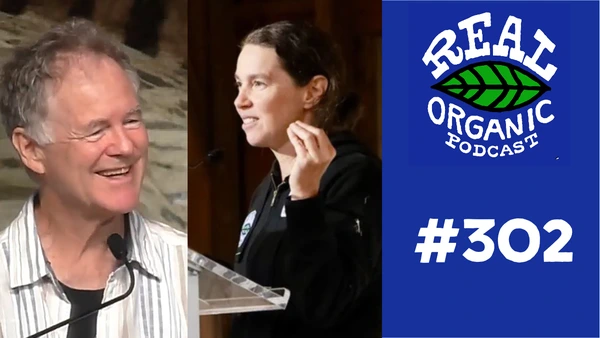
Thomas Massie and Chellie Pingree with Dave Chapman, live on stage at Churchtown Dairy, September 19, 2026:
Dave Chapman 0:00
We’ve all been waiting to hear from Thomas and Chellie. It’s exciting to see, in our very, very divided country, two people from quite different political backgrounds who are coming together for things that most of us, all of us, pretty much agree we should do. Chellie Pingree and Thomas Massie, please come up. How nice. Well, I would like to hear what the view is like for you too.
Dave Chapman 0:43
I know, Thomas, you’ve had a very exciting couple of weeks here, and we’re all watching with great support. But we’re here to talk a little bit about farming today. When you look at the problems that have come upon us in the federal government around agriculture, and specifically around chemicals, specifically, we’re talking about Bayer and glyphosate. Could you talk about how you two came together to figure out what to do, and which events precipitated which?
Thomas Massie 1:36
Well, sure. I raise beef cattle. I raise them on grass and grass finish them, and I was trying to get marbling in the meat, like one of your previous speakers spoke about. So I decided to get some Wagyu cattle, and I cross them with Angus, and I call them Wangus. But I quickly ran into this problem everybody runs into that does this at a small scale, which is: how do you get these things processed?
Thomas Massie 2:03
How do you sell just a package of steak to your neighbor without putting them in a trailer and driving three hours to another state, or to the other side of your state? And so in 2015, Congress repealed country of origin labeling for beef and pork. Your phone’s labeled, your shoes are labeled, your car is labeled. You can know where everything came from except for your beef and pork now, because of that. And that was the meat packers who conspired.
Thomas Massie 2:34
They wanted to buy cheaper calves from Canada or Mexico and finish them out. So I went to Chellie and said, “We got to do something to help farmers.” Chellie can tell you about her farm. The other thing I do on my farm is I raise meat birds like chickens, and peaches and apples. But peaches are real hard to do organically. Maybe someday I’ll get there. But everything else is pretty much organic. But Chellie’s got a really interesting farm.
Thomas Massie 3:04
She smuggled me some raw milk to Washington, D.C., as part of her charm. She knew I didn’t have a milk cow, and so I knew she couldn’t be all bad. And we got together and did something called the PRIME Act. And I’ll let you talk now, Chellie.
Chellie Pingree 3:21
Oh, yeah. Well, I mean, Thomas gets a lot of credit for the PRIME Act. You actually managed to slip the language into the farm bill this time, which is a big victory over Big Meat. So there we go. That was good. But yeah, we’ve been working on that since 2015. A variety of different bills. The PRIME Act. We did some raw milk stuff. We just had a lot in common about the things that we were doing.
Chellie Pingree 3:44
Not only does he raise some of his own animals, and I’ve been an organic farmer since the 1970s. I don’t know if Eliot’s out there, but he was my college instructor, so I go way back. But I’ve just been really interested in all of these things, and I think one of the more momentous occasions was I was building a new house, putting solar panels on the roof, and Thomas looked over my solar panel design, and also how he does his batteries in the basement.
Chellie Pingree 4:12
So you can imagine we’ve just had a lot of stuff to talk about and a lot of stuff to work on. And fast forward, when we hit this period of time now, where we’re fighting with Bayer and glyphosate and these immunity bills, we’ve teamed up on a bunch of that stuff. And I just want to say, I’m going to be super sad to have him not in Congress anymore, because we’re going to really miss him. And people did everything to keep him there.
Thomas Massie 4:38
But quick story about one of the first bills we introduced together. It was a raw milk bill, and this is mostly legislated state by state, which is fine. That’s probably where it should be. But if you go from one state where it’s legal to have raw milk to another state where it’s legal to have raw milk, the feds will show up in black SUVs and pour your milk out and handcuff your cows, or hoof cuff, whatever it is.
Thomas Massie 5:02
And so we co-introduced this raw milk bill, and man, the milk lobby came after us, and they were trying to tell people that milk would kill people. I’m thinking, you’re not doing a very good job promoting your product. And they said if our bill would pass, there weren’t enough emergency rooms to take care of all the kids. And my wife was at home at the time reading her Google alerts, and the milk lobby was making me out to be the devil. And she texted me, and she said, “OMG, I didn’t realize the lactose lobby was so intolerant.”
Chellie Pingree 5:34
This is pretty good. Well, I know we’re going to run out of time, so to talk a little bit about the situation that we’re in today and what an interesting couple of years we’ve had working on this glyphosate thing. Prior to the MAHA intervention in Congress in the last couple of years, we didn’t have a lot of support, particularly on the Republican side, when it came to pesticide bills. And we’ve seen a big change, and I really learned about that almost two years ago.
Chellie Pingree 5:59
We were taking up the Interior Appropriations Bill. I’m the ranking member of the subcommittee there, and that’s where Bayer first tried to put the amendment in that gave them immunity from lawsuits and preempted all of our states. Now, Maine’s one of those states that’s got 30 different local and municipal rules regarding glyphosate, so I could not go home to my home state and say, “Guess what? I just took away all the laws you’ve passed over the years, and all the things that Maine organic farmers and other people have fought for for so long.”
Chellie Pingree 6:29
And also, I don’t believe in the immunity clause. So I’m the ranking member on that committee. We’re doing our markup. It was in July of ’25, and I put in an amendment to withdraw the Bayer language that the Republicans had put into that bill, that the administration had put in there at that time, I think, and I lost. I didn’t win in the subcommittee. I wasn’t able to take it out.
Chellie Pingree 6:50
But when I walked out into the hallway after our markup, I ran into a person who I actually no longer know who they are. So if you’re in this room, let me know. But they were handing out flyers about the glyphosate amendment. It wasn’t Kelly. It wasn’t other people that we work with a lot. It was just somebody who was there showing up to do it, an activist. And I lost.
Chellie Pingree 7:11
But when we got to the negotiations at the end of the year, I convinced the Republicans that we weren’t going to go along with the bill unless they took that out. And one of the reasons I was able to do that is many of my Republican colleagues have been getting calls over time from MAHA moms and MAHA activists who have said, “You can’t go along with this.”
Chellie Pingree 7:30
So, you know, fast forward, it comes up again the next year, and then we had to deal with it in the agriculture bill and the farm bill. And one of the things that was interesting, we had a markup on the farm bill in the Agriculture Committee. I couldn’t win in the Agriculture Committee, but when it got to the floor, people had heard enough about it. They had been lobbied enough about it. There had been the Supreme Court, the bill that we did.
Chellie Pingree 7:55
We actually went together to the Supreme Court to watch the case. In case you didn’t know, there’s a special bench for members of Congress. The two of us were there alone watching that. Welcome to our world. And then we submitted a bill. You did a bill right after that.
Thomas Massie 8:10
We did a standalone bill, actually, before we won the farm bill. And we’ve done another standalone bill, and another Republican has done a standalone bill to prevent immunity for glyphosate. But that Supreme Court rally happened, like, the week we were marking up the, or voting on the farm bill on the floor. And I do think it was the momentum from the people who showed up. Like, congressmen see when there are crowds in D.C., and they’re like, “What’s going on over there?”
Thomas Massie 8:40
And we were over at the Supreme Court, Chellie and I, with a bunch of other folks, before the hearing. Now, unfortunately, you all know, we lost in the Supreme Court, but that rally carried enough momentum that in Congress we had an amendment on the floor to take that troublesome glyphosate immunity out of the farm bill, and our amendment prevailed, and they had to strip it from the farm bill. So we won that. Yes.
Chellie Pingree 9:08
And thank you. And it all sounds like a little bit of a jumble, but that’s because I just want to give you a sense of the fact that Bayer had about 50 lobbyists working this amendment, or immunity clause. They spent $9 million, allegedly, over the last couple of years trying to convince Congress to give them full immunity.
Chellie Pingree 9:25
They did win it at the Supreme Court, but it’s the first time in my nearly 20 years in Congress that we’ve had a victory like that on a pesticide, herbicide, that got such bipartisan support. I mean, sometimes we get a bunch of environmentalists who support things. Sometimes the organic farmers show up. Sometimes other things happen, and we’ll get a certain group that cares about it. People are worried about their health.
Chellie Pingree 9:49
All kinds of different groups will occasionally associate themselves with this. But that was the first time on the floor. We had 207 Democrats vote for it, 73 Republicans. I’ve never seen anything close to that happen, and I think people should really understand what a moment in time that is.
Chellie Pingree 10:05
And that is purely because of the climate out there: all of you, MAHA activists, people who’ve never been engaged in politics before but have said, “Wait a minute, I don’t want my kids eating this stuff. I want to be engaged in one way or the other.” And they found their way in, whether it’s through the Republican side or the Democratic side, or they just heard about it on Instagram, or they know Kelly or MAHA moms or Moms Across America.
Chellie Pingree 10:29
All these groups that have been talking about it a lot. Suddenly, people are saying, “I can actually do something about it.” And my feeling is there is momentum, there is opportunity on our side, and we have to make sure we continue to stick together and make this nonpartisan, health-related, organic farm work-related. For the future of everybody, we have to keep fighting on this.
Thomas Massie 10:51
And if, yeah, if I could insert a small call to action here, because I might forget it at the end. People talk about how you get better people in Washington, D.C. How do we replace those clowns? How do we get better clowns? And this November, you’re going to get different clowns. Okay.
Thomas Massie 11:12
But I think if you spent more of your energy getting the clowns to get in the clown car you want, instead of trying to get a different clown, just accept they’re clowns, and then treat them like cattle. Make sure they feel the electric fence. And then you won’t even have to turn the fence on someday.
Chellie Pingree 11:36
There you go. That’s about as good a metaphor as I’ve ever heard. Yeah. And a really important thing is that, you know, we all get wound up. I mean, we’re all here in this room and been very specific today, and had just amazing speakers. Thank you to everybody and everyone who does all this work. But we often talk to our politicians about other things. “What do you feel about the war in Iran? Or have you signed onto the discharge petition on the Epstein files? Or are you worried about your health care costs?”
Chellie Pingree 12:03
I mean, there are so many things to talk about. But you’d be amazed how rarely people who think about food every day, who care deeply about what they eat, talk to their politician about it when they come to the door, or when they see them at an event, or hound them endlessly about these things. And it’s really important.
Chellie Pingree 12:20
And the other thing that’s really important is when these issues come up, because we don’t have that many votes on an amendment on glyphosate, or on things that we deeply care about, the funding for organic research, or all the other things we’ve been talking about today. When those things happen, you have to make sure you’ve got a phone tree a mile long of people who are calling, because it’s true, we’re going to have whatever politicians get elected for the next two years.
Chellie Pingree 12:45
And Democrats aren’t always on the right side of this, and it’s not always because they’re in the pocket of the pesticide company. Sometimes they are too. But the other side of it is, sometimes they just don’t even know or care. They’re worrying about a million other things, and nobody thought to tell them about these important issues. So Republicans, Democrats, whoever it is, you got to make sure you have educated politicians you’re sending to Washington.
Thomas Massie 13:10
And let me give you a secret weapon. I don’t share this with too many people, but I feel safer sharing it now that I won’t be in Congress. When you call, you’re likely to get an intern, right? Who’s going to take that down, and they’re pretty diligent. They’ll write it down and give it to the boss if you don’t call them names, right? They might lose your message if you say, “I’ll never vote for that guy again.” Don’t say that. Just be nice.
Thomas Massie 13:37
But I would suggest, here’s how you get past the intern. Ask the intern, “Could you connect me with your legislative assistant or legislative director who’s in charge of ag policy in your office?” And the intern is trying to please. They got three months there to do a good job, and they know, like, “Oh, okay, that’s Joe Alexander. Yeah, here, I’ll transfer you to him.”
Thomas Massie 13:59
Now you’ll be talking to the person that is going to likely write the vote recommendation for the congressman when they walk to the floor and vote on an amendment that Chellie Pingree or I have. And then, now that I’ve given you the secret weapon, you have to be very nice with that other person, because they may have a law degree. They are not an intern, and they oftentimes report directly to the congressman. They certainly interact directly with the congressman.
Thomas Massie 14:28
So ask for the staffer who is in charge of ag policy in the office, and be as polite as you can. And they might connect you, and then make a connection with that person.
Dave Chapman 14:39
Okay. Political action plan. Can I ask, where are we at? I know that you’ve put together three, four bills right now about trying to rectify what has happened in the Supreme Court, in the executive order. Could you talk about that? Is there hope?
Thomas Massie 15:06
Well, the nature of what we lost in the Supreme Court: we listened to the arguments in front of the judges, and the judges conceded there in real time that Congress could act and change this. Even, I think, there were judges who ruled against our position in this ruling who didn’t really want to, but the law was the law.
Thomas Massie 15:27
And the law, which I don’t like, says that once the EPA gives a label to one of these companies, a state can’t put on an even stronger label, even if they have evidence that it causes cancer. And so that’s the big thing we need to do, is give the states more power, really, if they have reasonable belief that this could cause cancer. And this is what the argument is about. It’s whether there’s going to be a skull and crossbones on glyphosate.
Thomas Massie 15:58
It’s not whether to ban glyphosate. It’s not even as strong of an argument as we would like. But that was the argument at the Supreme Court: can states put a better label on it? We think they should be able to. They’re looking for what I call a get out of court free card. That’s what every manufacturer of any product wants, a get out of court free card. And we just don’t think they should get immunity from state courts or federal courts.
Chellie Pingree 16:28
Yeah, and I would say another important component of this is glyphosate is up for re-registration. I mean, it’s way behind in looking at current health data. The EPA is far behind about that. And one of the dangerous pieces of language that’s in the Senate Farm Bill that they just passed – you might have seen them wheeling in Mitch McConnell. Was he alive? It’s Kentucky. I don’t know. They don’t even know there, I bet.
Thomas Massie 16:57
By the way, I’m going to introduce a term limit bill before I leave Congress called “Three Strokes and You’re Out.”
Chellie Pingree 17:03
Three strokes. Yeah, I think there’s four or five there.
Thomas Massie 17:10
Fetterman’s on deck, though.
Chellie Pingree 17:13
There you go. He didn’t want to listen to our congressional humor, dark humor. So I mean, that is a five-year delay in that re-registration. So that is very bad. We cannot. We might. We were just talking about it behind the scenes here, about maybe thinking about another amendment strategy when the farm bill comes up again. It’s a disastrous farm bill. We shouldn’t even move it through this year … Yeah, it’s a terrible, terrible farm bill.
Chellie Pingree 17:38
So, but all that said, this goes back to the EPA, where we have a lot of other problems. My committee does have oversight of the EPA, and so I think we’re gonna… If I’m in the majority and I’m the chair of that committee, not the ranking member, then I have the ability to hold hearings, which I haven’t had for two years. I also have investigatory and subpoena power. So we would have a lot more opportunity to get information and diligence. And I see …
Chellie Pingree 18:05
Thank you for your wonderful presentation earlier this morning. But you could see, if nothing else, based on that letter, how we’ve gotten all these years of the EPA saying glyphosate is just fine. You can drink it, whatever they say. So I mean, I think we have to take a much bigger approach on this and get EPA to finally make the right decision, and push them to do that.
Chellie Pingree 18:26
So that will be very important, and that could come through legislation, or it could come through making sure we don’t allow them any ability to hold back on that. By the way, I also have another bill that would ban paraquat completely. That is a ban, an outright ban on paraquat, and I’m doing that with another Republican, Anna Paulina Luna. And once we have the election cycle, we’ll look for others who might want to support some of these bills.
Chellie Pingree 18:52
But again, I think we have an important moment in time. I know one of the earlier speakers was talking about atrazine coming up for re-registration. This has not been a very cooperative EPA. Lee Zeldin was one of my colleagues in the House, and he’s now the administrator of the EPA. When he was in the House, he was part of the PFAS task force. PFAS, another big issue coming from Maine.
Chellie Pingree 19:14
We’ve really had to deal a lot with that, and the spreading of sewage sludge in our state, which has happened in all of yours too. But we need to do much more to regulate PFAS. And what I was going to say about Lee Zeldin was that he was the head of the PFAS task force. Then when I had him before my committee last year, and they’re backing down on a lot of the PFAS rules, he said, “Well, now I represent this administration. I’m in a different position than I was before.”
Chellie Pingree 19:42
So we got to hold his feet to the fire. People are worried about all of these things, so I think some of our focus will be on making sure nothing else bad happens in the farm bill, and then a lot on the EPA, because this is really their responsibility, and we are letting that fall apart.
Thomas Massie 19:59
And the irony of the EPA now is they’re the ones providing the imprimatur of safety, so that then nobody is liable. So the organization that’s tasked with ensuring safety is now the organization that keeps you from going to court when something fails in this lineup.
Chellie Pingree 20:20
Which should be the job. I mean, the federal government’s job should be to keep you safe. You shouldn’t have to go to court because dangerous chemicals harm your life. That shouldn’t be our only vehicle, using the courts to win these things.
Thomas Massie 20:33
So, just another lesson on “be careful what you ask for” when you try to get something written into law that you think is going to help you, in Kentucky. The Kentucky legislature told the University of Kentucky, “You got to buy a certain amount of Kentucky products.” Like, we have a Kentucky Proud label. It was meant so that they would buy vegetables and stuff from farmers in Kentucky and sell it in their cafeterias.
Thomas Massie 20:57
Well, the University of Kentucky discovered that Mountain Dew and Pepsi were bottled in Kentucky, and so they used the money to buy Pepsi and Mountain Dew. And they were legal. They were violating the spirit of the law, but they were still legal. But they got that fixed. But I’m just saying, you can’t give these suckers any wiggle room.
Chellie Pingree 21:18
That’s a technical term. Did not give the suckers wiggle room.
Thomas Massie 21:25
Well, it’s kind of like Driscoll’s. You know, I didn’t know they were doing hydroponic. My grandkids are eating those blueberries, and I always thought Driscoll’s… You know, until I got here today. I can tell you, I’m going to go home and take Driscoll’s off the menu.
Dave Chapman 21:38
That’s right. So, looking forward, it’s hard to imagine that you won’t be there, Thomas, and we’ll talk about that in a moment. But I’m just curious, for all of us. We don’t know what to do. We see the problem very clearly, and we see a solution very clearly, but we don’t know how to move that solution beyond our own personal lives, which is a great place to start. But you, looking at this from a federal position, a federal perspective, what do you think we should do?
Chellie Pingree 22:17
Me or Thomas?
Dave Chapman 22:19
You can start. He can finish.
Chellie Pingree 22:21
Specifically on pesticides, or the whole shebang?
Dave Chapman 22:26
I’d like to have the whole shebang. Yeah. Okay, let’s do the whole shebang.
Chellie Pingree 22:30
Well, first off, I mean, this has been a wonderful collection of people in a room, and I really appreciate very much this important conversation about organics, and some of the dangers that are out there, and how we go back in there and get the exact standards that we want, and make sure we’re vocal on that. I mean, it’s been a lot of years that people have been fighting in the trenches, and it is fully time to go back and demand the organic standards that we want.
Chellie Pingree 22:55
And I think it’s a particularly important time on that one, because I’ve been living in this policy for the last 20 years, watching what’s been changing in Washington. Much more interest in the market around organic food, and people eating healthier food and making sure they can get it. But then this creeping regenerative conversation, where it’s a free-for-all out there, and whatever you want to call regenerative is suddenly regenerative.
Chellie Pingree 23:18
And I’ve been listening to all those debates, and they’re very helpful. But I think the more you can help all of us in Washington be informed about how to move forward on that, we can take some of that from you. But this is a time to double down on that fight. It’s extremely important. It’s also important because the USDA is being dismantled before our eyes. Our research capacity, Beltsville, is being shut down. I mean, there’s more destruction there that you know.
Chellie Pingree 23:43
County offices are closing down. I know in my state we lost pretty much all five of the engineers that we had to do technical assistance for the farmers in our state. We’re losing funding in so many of these programs. It’s a very perilous time, and we literally need everybody on all fronts. And we know how much organic farmers depend on conservation programs, and the technical assistance they get putting grants together. So there’s a lot to worry about out there.
Chellie Pingree 24:08
But I do think there’s a door open here right now around the public interest and understanding about things like glyphosate and paraquat and atrazine and PFAS. I mean, these are becoming household words that never were things people talked about all the time. And so while we don’t have our complete agenda formulated for next year, because we literally don’t know who will get elected, who will be in the majority, I think it will be big.
Chellie Pingree 24:32
And I think we have to make a full court press, particularly around toxic chemicals. And the organization is out there. I mean, you are here, but there are just hundreds of people, hundreds of thousands of people out there, who are not necessarily watching this moment, but are just following these topics on Instagram and their social media and saying, “Tell me what to do.”
Chellie Pingree 24:52
And I think we all have to be better spokespeople about letting people know there’s a bill up, there’s an amendment up. But it is our moment in time.
Dave Chapman 25:00
Absolutely.
Chellie Pingree 25:00
In a good way.
Dave Chapman 25:01
Yeah, I think that’s actually millions of people are watching this. Yeah, millions. It has really changed, Thomas.
Thomas Massie 25:10
I mean, there are other problems facing small farmers and regenerative farmers, and I think we need to work on all of these things. I’ll tell you quickly about a bill that I introduced with a different Democrat, sorry.
Chellie Pingree 25:22
We got to get them all in. Yeah, Marie Gluesenkamp Perez.
Thomas Massie 25:25
Exactly. She was concerned about the transfer of farms, and that there aren’t enough young farmers, and how do we get them into it? And one of the things I observed, because I bought a farm from my father-in-law, and now I’m thinking about how do I transfer the farm to my kids, or one of the kids if he’s interested, is if you wait to die, there’s no tax on the transfer, and there’s a stepped-up basis.
Thomas Massie 25:51
Okay, but what this encourages is this perverse system where you got to wait for the patriarch or the matriarch to die before the farm gets transferred, and then the next generation has equity in it. So we introduced a bill that says, as long as… And we tried to keep people from cheating and using it for loopholes. But as long as you’re transferring a farm to a family member, you don’t have to pay capital gains tax when your kids buy your farm.
Thomas Massie 26:21
Because for a lot of older people, that is their retirement, is their farm. And so when they try to transfer it to the next generation, and the next generation is willing to take on a mortgage to buy that, then you lose all of that. And so the incentives are all wrong. So we’ve got a bill that says when you transfer a family farm, there’s no capital gains tax as long as you keep farming. Now, if one day you turn it into a subdivision, I’m sorry, you got to pay some back taxes. Okay.
Chellie Pingree 26:53
Fair enough.
Thomas Massie 26:54
And then the other thing is the PRIME Act. I think it’s really important, and we’ve been working on this so long. It is in the House Farm Bill. I don’t know if it made it in the Senate Farm Bill, so I don’t know if it’ll make it in the final version.
Thomas Massie 27:09
But basically it says that if the farmer and the processor and the consumer are all in the same state, they can be regulated differently than having these giant USDA regulations that are meant to regulate the Oscar Mayer wiener factory that has truckloads of animals coming in and truckloads of, you know, Oscar Mayer wieners going out. Some of these small processors process less meat than a steakhouse in Washington, D.C., does on K Street in a night, right?
Thomas Massie 27:37
And what we proposed is, let the state, or even the county health inspector, regulate these small abattoirs. So when you go into a restaurant, you can see, did they get a 96% on their last rating? You know, and there’s not a health inspector sitting there every day, but somebody comes in once in a while to make sure stuff’s clean, and there can be a surprise inspection.
Thomas Massie 28:00
I think it could be done a lot better in these small facilities by a county health inspector or state health inspector, where they get a grade card, and you can decide, “Do I want to buy meat that was processed here?” But more importantly, you can know the farmer who did it. I mean, that’s… I think the organic label is important. I rely on that when I go to a grocery store to buy stuff. But when I’m buying, I buy local, and I want to see the farmer who did it, to know if I trust them.
Chellie Pingree 28:30
Exactly.
Dave Chapman 28:36
Thomas, maybe one last personal question. What’s next?
Thomas Massie 28:42
You know, I have 10 ideas in my head. So if somebody kidnapped me out here and interrogated me, they wouldn’t even know, because I don’t know what I’m going to do next. But I like inventing, and I like farming. My wife, who’s here today, we just started seven piglets, and we’re going to try to do pasture-raised pigs on acorns in the hills of Kentucky, in addition to our beef.
Thomas Massie 29:05
I want to invent a bunch of tools for small farmers that make it easier to farm and easier to do regenerative farming. I’ve already built a self-propelled chicken tractor, like a Roomba with chickens in it, and it’s been running on my farm for several years while I go to D.C., because I couldn’t get anybody to move my chicken tractor while I was gone. But it runs on capacitors, so I call it the Clux Capacitor.
Chellie Pingree 29:31
I just want you to know, if you ever tuned into C-SPAN someday, and you would have had to do this in old times, but maybe I’ll find a clip of it sometime, you could have seen Thomas and I sitting on the floor somewhere in the middle. There’s sort of a middle section where kind of Republicans and kind of Democrats sit together. We can sit anywhere on the House floor.
Chellie Pingree 29:52
But anyway, I’m watching his phone, and he’s just showing me clips of the chicken tractor moving through the field. I’m just cheering it on and …
Dave Chapman 30:01
I saw a video of the chicken tractor last night. It’s solar powered, and it moves, I think, one inch a day.
Thomas Massie 30:08
One inch every 10 minutes.
Dave Chapman 30:09
Every 10 minutes.
Chellie Pingree 30:10
Yeah, really.
Dave Chapman 30:11
And it plays a little song so the chickens know it’s moving.
Thomas Massie 30:14
And it collects the rainwater as it’s going.
Dave Chapman 30:16
That’s right.
Thomas Massie 30:17
Yep.
Dave Chapman 30:18
Amazing. We will try to see if we can post that. Okay.
Thomas Massie 30:23
Rather than running for another office, I might take my own advice and set up some kind of organization that tries to get the clowns to do the right thing.
Chellie Pingree 30:30
There you go. Yeah.
Dave Chapman 30:37
All right. Well, we’re at time. So thank you very much, Chellie and Thomas. We’re so, so happy. Thank you, everybody.
Chellie Pingree 30:47
Thank you. Thank you. Thank you very much.
Key takeaways
- Chellie Pingree says the House floor vote to strip glyphosate immunity from the farm bill drew bipartisan support she had not seen before. “We had 207 Democrats vote for it, 73 Republicans. I’ve never seen anything close to that happen.” (Chellie Pingree, 9:49)
- Pingree says Bayer “had about 50 lobbyists working this amendment, or immunity clause. They spent $9 million, allegedly, over the last couple of years trying to convince Congress to give them full immunity.” (Chellie Pingree, 9:08)
- Thomas Massie says the Supreme Court case was about whether states can put a stronger warning label on glyphosate, not whether to ban it. “They’re looking for what I call a get out of court free card.” (Thomas Massie, 15:27 to 15:58)
- Massie’s tip for calling Congress: ask the intern, “Could you connect me with your legislative assistant or legislative director who’s in charge of ag policy in your office?” and then be polite, because that staffer may write the vote recommendation. (Thomas Massie, 13:37 to 14:28)
- Massie says the PRIME Act, which is in the House Farm Bill, would let “the state, or even the county health inspector, regulate these small abattoirs” when the farmer, the processor and the consumer are all in the same state. (Thomas Massie, 26:54 to 27:37)
Questions this episode answers
How did Thomas Massie and Chellie Pingree start working together?
Massie raises grass-finished beef and ran into the problem of getting animals processed at a small scale. He and Pingree teamed up on the PRIME Act and a raw milk bill. Pingree says, “we’ve been working on that since 2015.” (Thomas Massie, 1:36 to 3:04; Chellie Pingree, 3:21)
What happened to glyphosate immunity in the farm bill?
Massie says a floor amendment to take the immunity language out of the farm bill passed: “our amendment prevailed, and they had to strip it from the farm bill.” Pingree says 207 Democrats and 73 Republicans voted for it. (Thomas Massie, 8:40; Chellie Pingree, 9:49)
What was the Supreme Court glyphosate case about?
Massie says the question was whether a state can require a stronger label than the EPA’s. “It’s not whether to ban glyphosate.” He says “can states put a better label on it? We think they should be able to.” (Thomas Massie, 15:27 to 15:58)
How can people who care about food get their representative to listen?
Pingree says “you’d be amazed how rarely people who think about food every day, who care deeply about what they eat, talk to their politician about it.” Massie suggests asking the intern to connect you with the staffer “who is in charge of ag policy in the office,” and being as polite as you can. (Chellie Pingree, 12:03; Thomas Massie, 13:37 to 14:28)
What is the PRIME Act?
Massie says it means “if the farmer and the processor and the consumer are all in the same state, they can be regulated differently” from large USDA plants, with state or county health inspectors overseeing small processors. (Thomas Massie, 27:09 to 28:00)
More Podcasts
View All Podcasts ➔